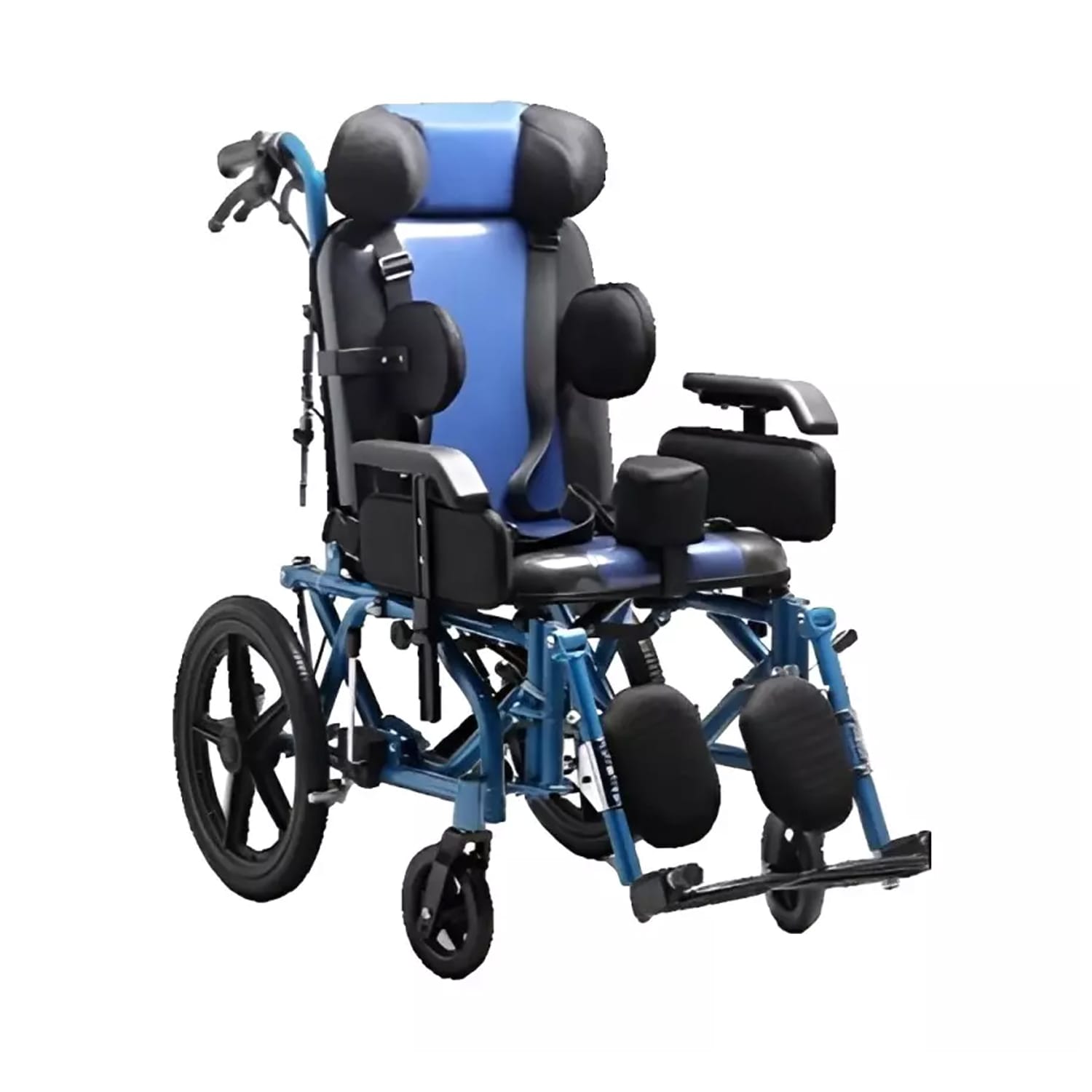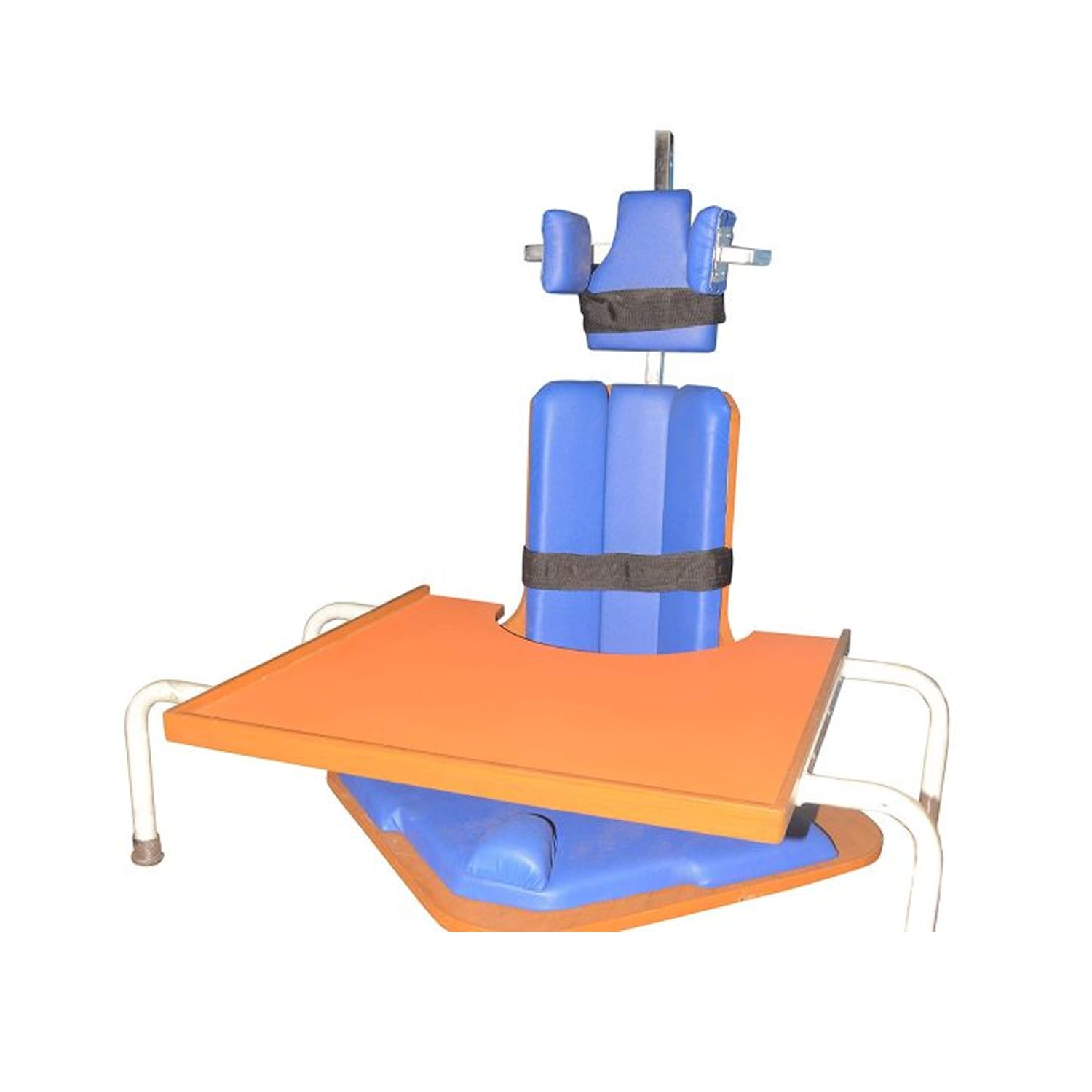




Cerebral palsy is a group of conditions that affect movement and muscle tone. It typically develops in early childhood due to damage to the developing brain, often before or during birth. Symptoms can vary widely, from mild to severe, and may include muscle stiffness, weakness, and impaired motor skills. Advancement of science and development has some positive effects on cerebral palsy care. Many individuals with cerebral palsy benefit from using special aids to help them with daily activities. These aids are designed to provide support and stability for people who have difficulty walking or who are unable to walk; they have features like voice control, remote operation, adjustability, head rest, supporting belts and footrests.
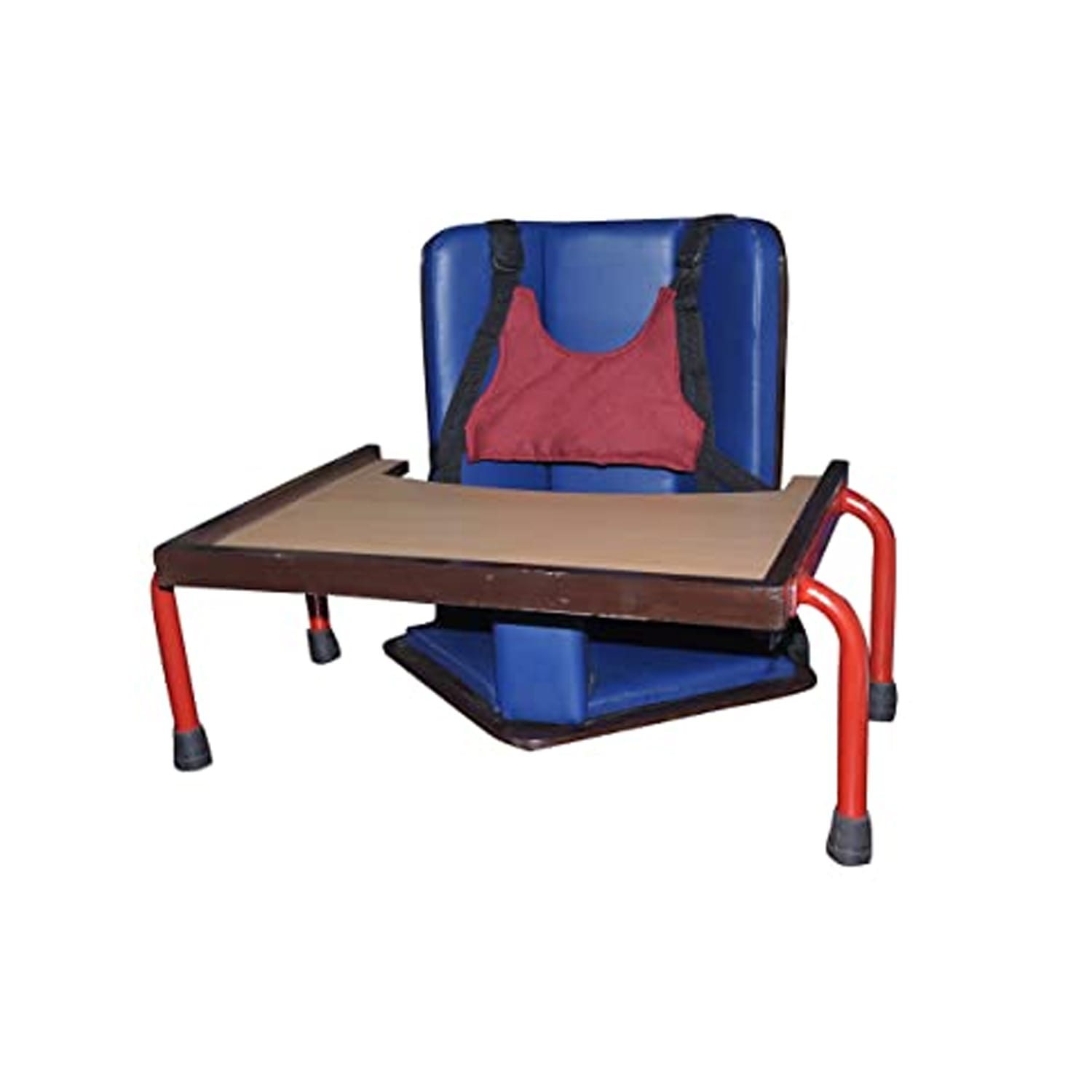
Corner Chair:
CP corner chair is a useful aid for children who have cerebral palsy, designed with multiple advanced features including activity table, back support, head support and thigh separator for enhanced comfort. Ideal for children who cannot sit up on his own and needs his back, shoulders and upper trunk supported; this allows the child to be independent, with hands free for play while maintaining optimal erect trunk alignment.
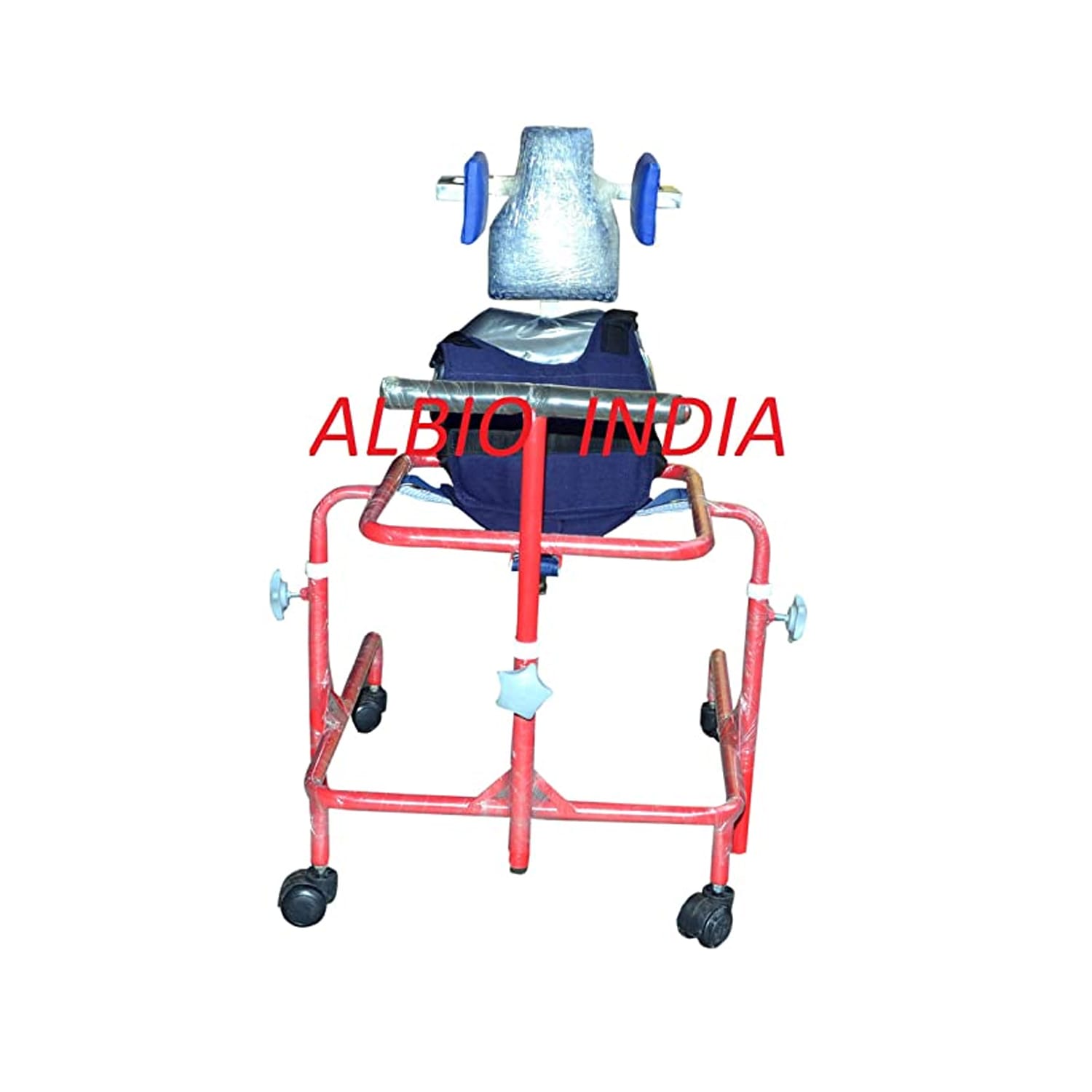
CP Walker:
There are walkers specially designed to assist with CP (Cerebral Palsy) mobility issues. Usually, these walkers have fixed elbow / arm supporting pad and hand grips to provide optimum support. It provides ideal support to the body while gait training, provide required support while walking and improves postural alignment.
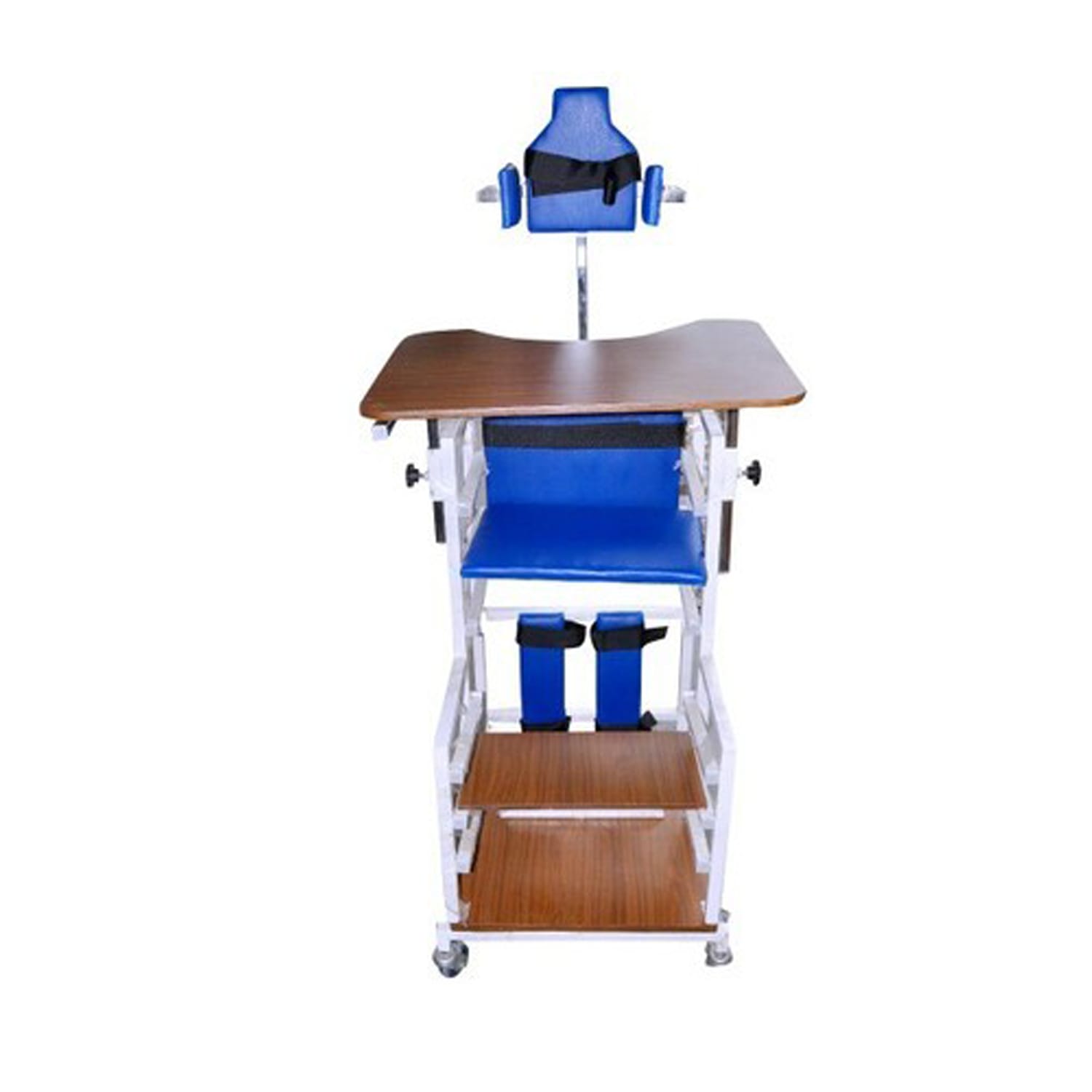
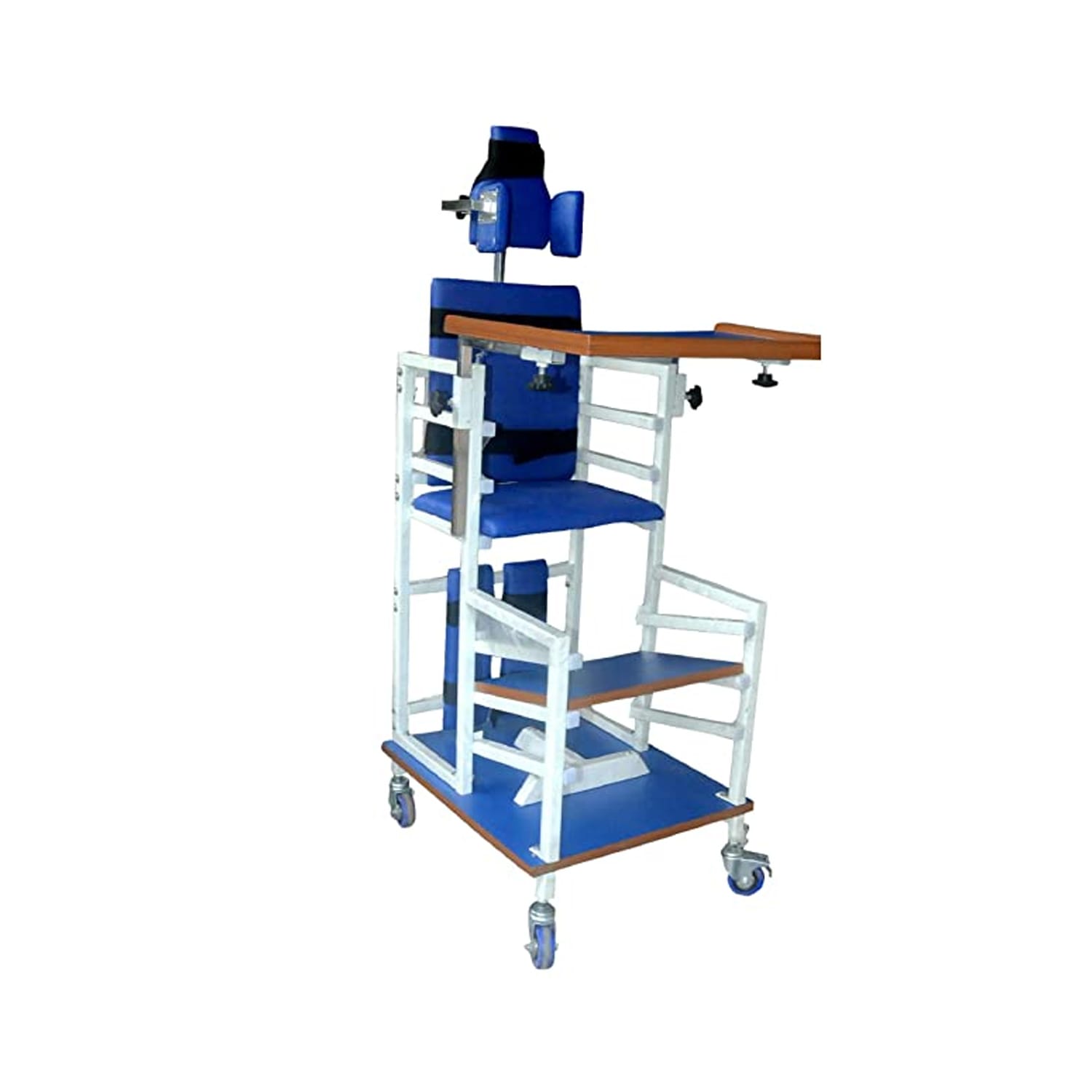
Chair cum Standing Frame:
CP (Cerebral Palsy) chair with standing frame is an ideal support for people who cannot sit up on his own and who needs his back, shoulders and upper trunk supported; this allows them to be independent, with hands free for play while maintaining optimal erect trunk alignment. Generally, these standing frames are designed with adjustable and removable thigh separator, foot separator for more comfort.
Walker Rolator:
Specially designed walker rolator is necessary for children and adults who can weight-bear and has reasonable shoulder and arm strength but required external support while walking. It provides optimum support while walking and helps to improve postural alignment, reduces the risk of fractures and osteoporosis, offers better stability and also minimizes the chances of slipping.
Wheelchairs:
Wheelchairs are essential mobility aids for individuals with cerebral palsy who have difficulty walking or standing. They can be manual (self-propelled or pushed by a caregiver) or powered (electric), providing mobility and access to various environments. They have multiple features such as tilt-in space and reclining, safety belts, solid castors as well as breaking system; these together will give mobility assistance and make them feel independent.
Gait Trainers:
Gait trainers are specialized walking devices designed to assist individuals with cerebral palsy in developing their walking skills. They provide support and stability, allowing users to practice walking with proper alignment and gait patterns.
Posture Control Walker:
An aid assists children with cerebral palsy with their mobility issues, including problems with balance and posture, allows the user to bear weight on their legs which increases bone strength and reduces the risk of fractures and osteoporosis, offers better stability and also minimizes the chances of slipping. Posture control walker can improve postural alignment, provides additional maximum grip and comfort while walking. This will be beneficial for child, adults and elders who need the support and alignment provided by the posture control design.
Orthotic Devices:
Custom-designed orthotic devices like braces and splints are often used to support and stabilize joints affected by cerebral palsy. They help improve posture and mobility by addressing muscle tightness and joint deformities.
Communication Devices:
Augmentative and alternative communication (AAC) devices like speech-generating devices and communication apps help those with communication difficulties express themselves effectively. In this new era, Robots are being developed to assist with daily tasks such as dressing, feeding, and mobility, increasing autonomy for individuals with cerebral palsy.
New innovations:
Smart home technology and home automation systems enable individuals to control various aspects of their environment, enhancing comfort and accessibility. Wearable devices, such as sensors and trackers, can monitor movement patterns and provide valuable data for therapy and assessment. Voice-activated devices and software facilitate hands-free control of various technologies, making them accessible to individuals with limited mobility.
Ongoing research and innovation continue to drive advancements in Cerebral palsy care, with a focus on personalization and affordability. These innovations aim to enhance mobility, reduce the risk of secondary complications, promote independence, and improve overall quality of life for those living with cerebral palsy. The selection of the most suitable assistive aid depends on the individual's specific diagnosis, functional abilities, and therapeutic goals. So, discuss with your healthcare provider to identify your unique needs to choose the aid accordingly. Check out cureka.com for specially designed cerebral palsy aids from top brands.