


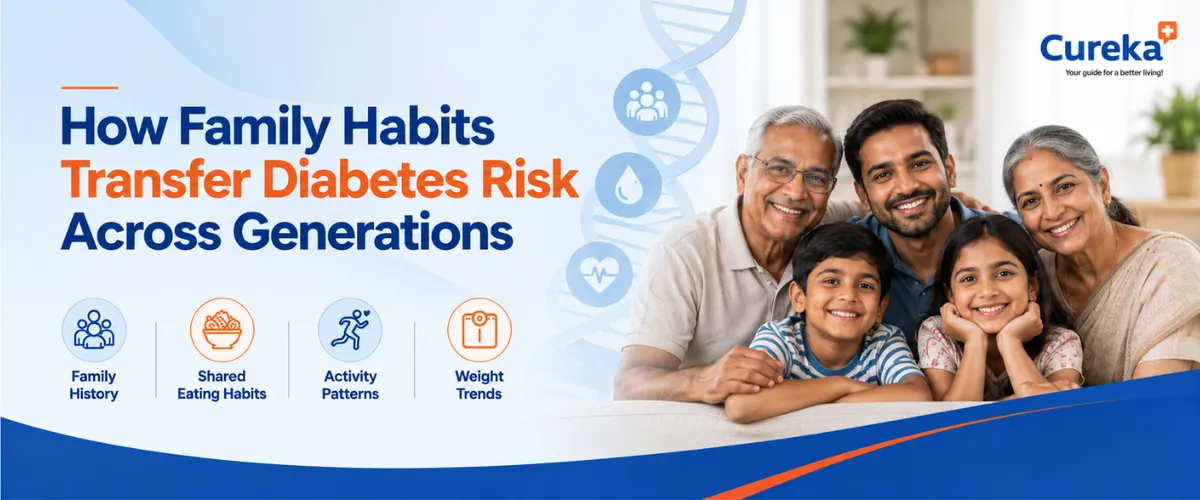
We often heard people say, "Diabetes runs in my family," which shows that diabetes risk passes down through generations. It may happen due to the gene and the habits that we follow over the years.
Our chance of getting chronic diseases like diabetes can be affected by what we eat, how much we move (or don't move), how stressed we are, and even how we sleep. The most remarkable aspect of this risk is that it is not limited to a single person. It has the potential to affect multiple generations.
By understanding how the family with diabetes transfers both lifestyle and biological factors, we gain the awareness to break the cycle and create a healthier foundation for the future.
Generational Echoes: How Diabetes Risk Transfers Across Generations
Diabetes, especially type 2 diabetes, is a condition that is impacted by everyday habits, the environment, and heredity. When we talk about diabetes inheritance, we truly mean a combination of genetic factors and lifestyle exposures that are shared among families.
From a biological perspective, a child's risk is greatly increased if one or both of their parents have diabetes. Type 1 diabetes is a complex disease that has both genetic and environmental determinants. Type 1 diabetes is a complex disorder that results from the individual and, possibly, the combined effects of multiple genetic and environmental risk factors (1) .
However, genes do not act alone; lifestyle choices have a significant influence on them. This is why family habits are so important in deciding who develops the disease and who does not.
Inherited habits: How family behaviors transfer diabetes risk
People with diabetes in the same family frequently share more than just DNA; they often share everyday routines. And these habits can unknowingly pass on risk factors from one generation to the next.
Here’s how it happens:
Sedentary lifestyle traditions:
In many families, physical activity isn’t part of their culture and lifestyle. A lifestyle that promotes metabolic slowdown is created by common habits like watching television after dinner or spending a lot of time at a desk.
On the other hand, even if genes predispose them to diabetes, families who prioritize walking, playing outdoor games, or going on weekend hikes can drastically reduce their risk.
Emotional and stress pattern:
Managing stress is another characteristic that runs in the family. If a family with diabetes has a history involving emotional eating, smoking, or drinking to deal with stress, the next generation often unconsciously repeats those behaviors.
You can prevent the majority of the physical, emotional, and behavioral effects of stress by regularly adopting stress management practices
Food culture and mealtime patterns
Food culture and lunchtime behaviors transfer diabetes risk mostly through dietary composition, a high intake of processed foods, and eating routine, all of which significantly influence body weight and insulin sensitivity.
Families frequently pass down cooking methods, recipes, and portion sizes from generation to generation. Those routines make your relationship with food long before genetics have a chance to act.
So, it is critical to avoid unhealthy habits that lead to diabetes; doing so may assist you in avoiding developing diabetes.
Misconceptions about health and medications:
Many families start to accept diabetes as a natural part of aging. When children grow up watching parents with diabetes, they might think that diabetes is inevitable and that prevention is useless.
Families can change their health path by changing the diabetes conversation to focus on prevention and early care rather than acceptance.
Recent studies found that physical activity, BMI, waist circumference, multi-SNP genetic risk score, and family history were strongly associated with future risk of T2D. (2)
How to avoid diabetes if it runs in the family
Just because your parents or grandparents had diabetes doesn’t mean you’re need to experience it as well. genetics might set the stage, but it’s your lifestyle choices that truly make the difference
Here are some steps that can reduce risk.
Adopt a balanced diet early
Prioritize regular checkups.
Manage stress and sleep
Stay physically active
Create healthy family patterns.
These small changes can change your family’s health story for generations.
The legacy you can change
It’s common to feel like diabetes is just a matter of fate, something passed down through the family that you can’t escape. However, science tells us a different story. Our health is impacted by a mix of genetics and our everyday choices, showing that we have a say in our well-being across generations.
The choices you make for your health today will be the legacy you pass on to your family tomorrow. So, make them meaningful!
References:
1.Genetics of Type 1 Diabetes - Dec 2023 - https://www.ncbi.nlm.nih.gov/books/NBK597411/
2.The link between Family History and risk of Type 2 Diabetes is Not Explained by Anthropometric, Lifestyle or Genetic Risk Factors: the EPIC-InterAct Study - Sep 2012 - https://pmc.ncbi.nlm.nih.gov/articles/PMC4038917/#S16