


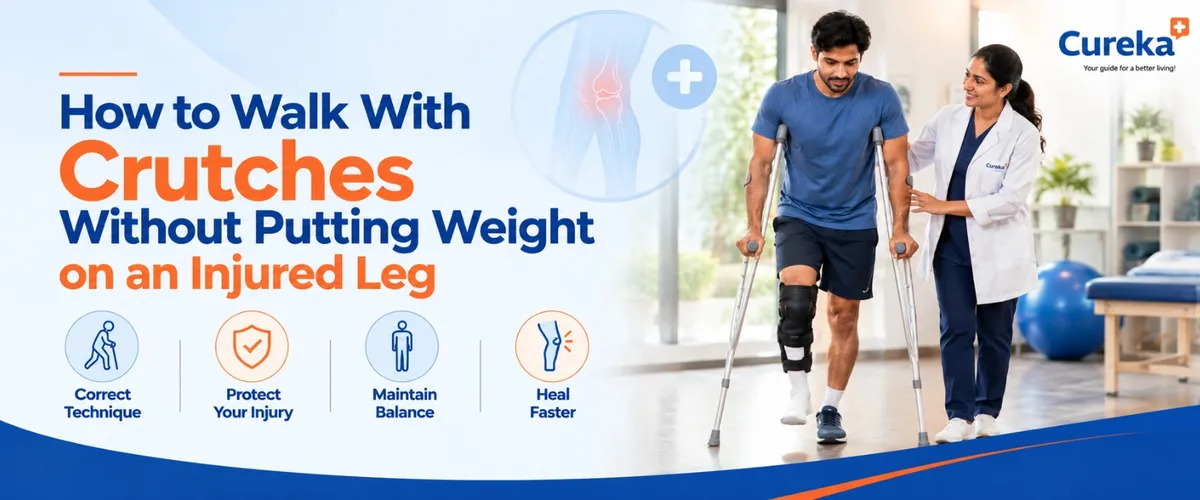
Learning to walk with crutches can feel awkward at first. You may worry about losing balance stepping on the leg by accident or simply not knowing how to use arms and crutches at the same time.
If your doctor or physiotherapist has told you to keep the injured leg non‑weight‑bearing the goal is different from using crutches for extra support. You must keep the leg completely off the ground while using hands, arms, crutches and the uninjured leg to move safely.
With the technique and a little practice walking with crutches can become much easier.
This guide explains how to use crutches, how to walk without putting weight on the injured leg, how to sit and stand safely and what to keep in mind when moving around at home.
What Does Non‑Weight‑Bearing Mean?
Non‑weight‑bearing means that the injured or affected leg should not bear weight while you are standing or walking.
In terms the injured foot should remain off the floor while you move. Your weight is supported through hands, arms, crutches and the uninjured leg.
This is different from:
Toe‑touch weight‑bearing: The toes may lightly touch the floor for balance. You should not put weight through the leg.
Partial weight‑bearing: You are allowed to put an amount of weight through the injured leg.
Weight‑bearing as tolerated: You may put weight through the leg within the limits advised by your healthcare professional.
These instructions are not interchangeable. If you have been specifically told to remain non‑weight‑bearing , do not assume that touching the floor or taking " a little" weight is acceptable.
Why Crutch Walking Can Feel Surprisingly Tiring
Walking without putting weight on one leg may look simple, but it requires considerably more physical effort than normal walking. Research on non-weight-bearing crutch walking found that it places a higher energy demand on the body, with the effort increasing further when navigating stairs.(1)
This is one reason it is important not to rush when learning how to walk with crutches. Short distances, controlled movements and adequate rest may be easier to manage than trying to maintain your usual walking pace.
Before You Start Walking With Crutches
Before practising your crutch walking technique make sure the crutches are properly adjusted and safe to use.
1. Make sure the crutches fit you
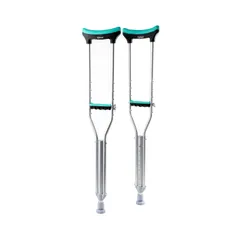
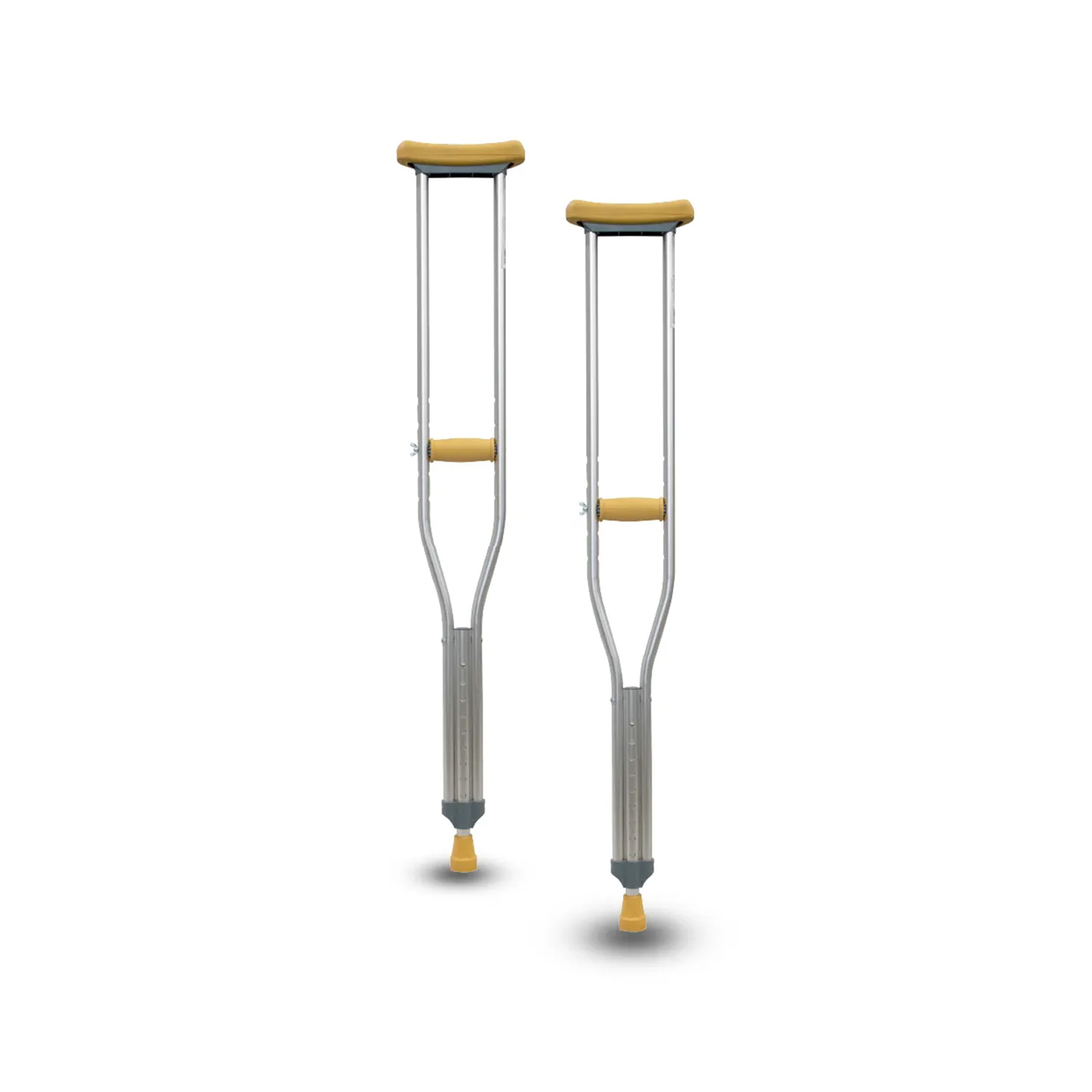
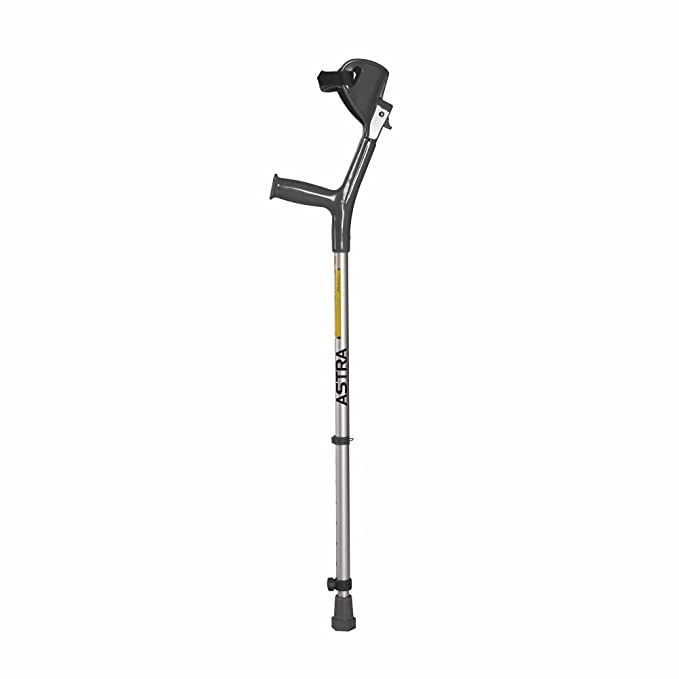
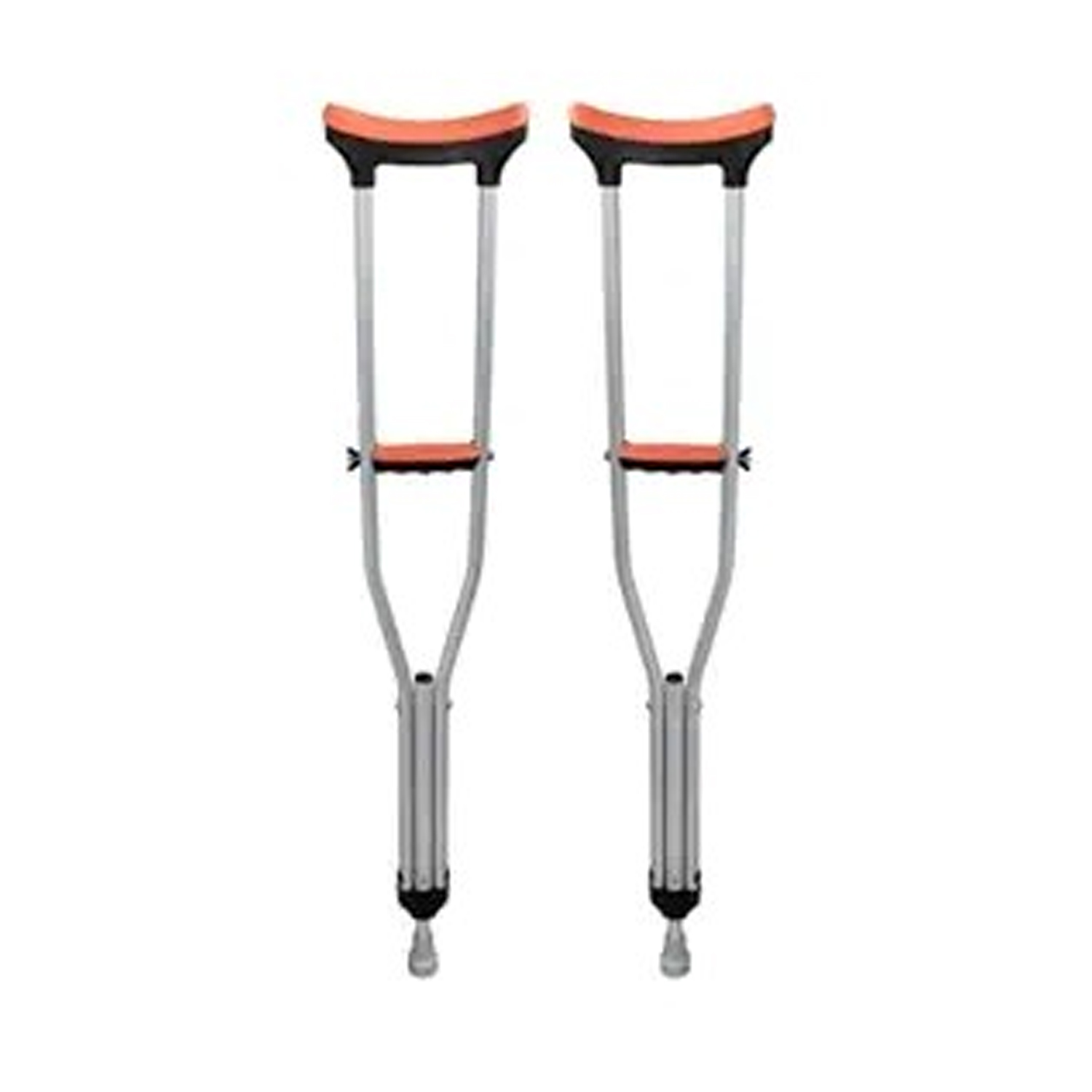
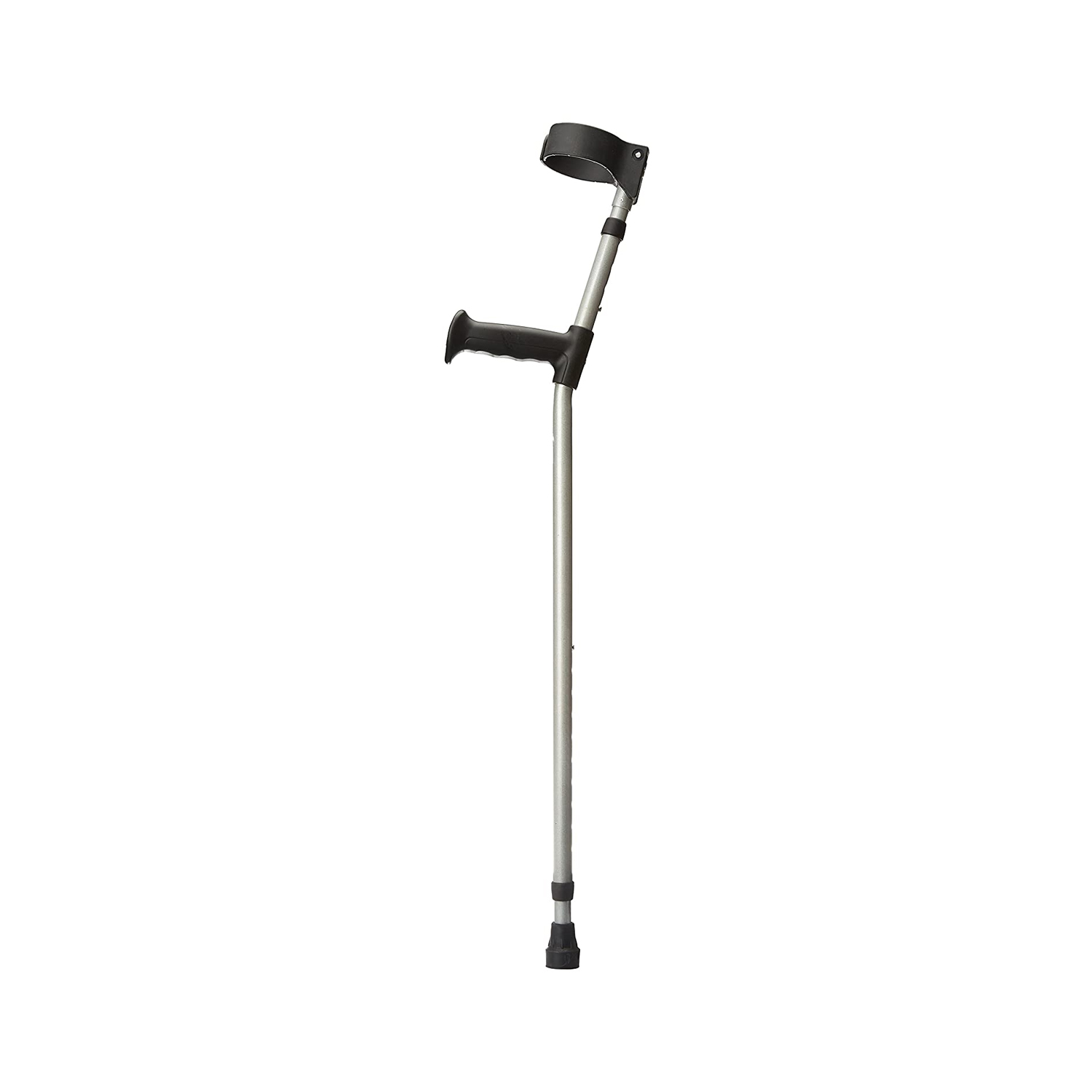
Underarm crutches should be adjusted to your height. MedlinePlus recommends keeping the top of the crutch below the armpit rather than pressing it directly into the armpit. Your elbows should be slightly bent when your hands are on the grips.
2. Do not support your body weight on your armpits
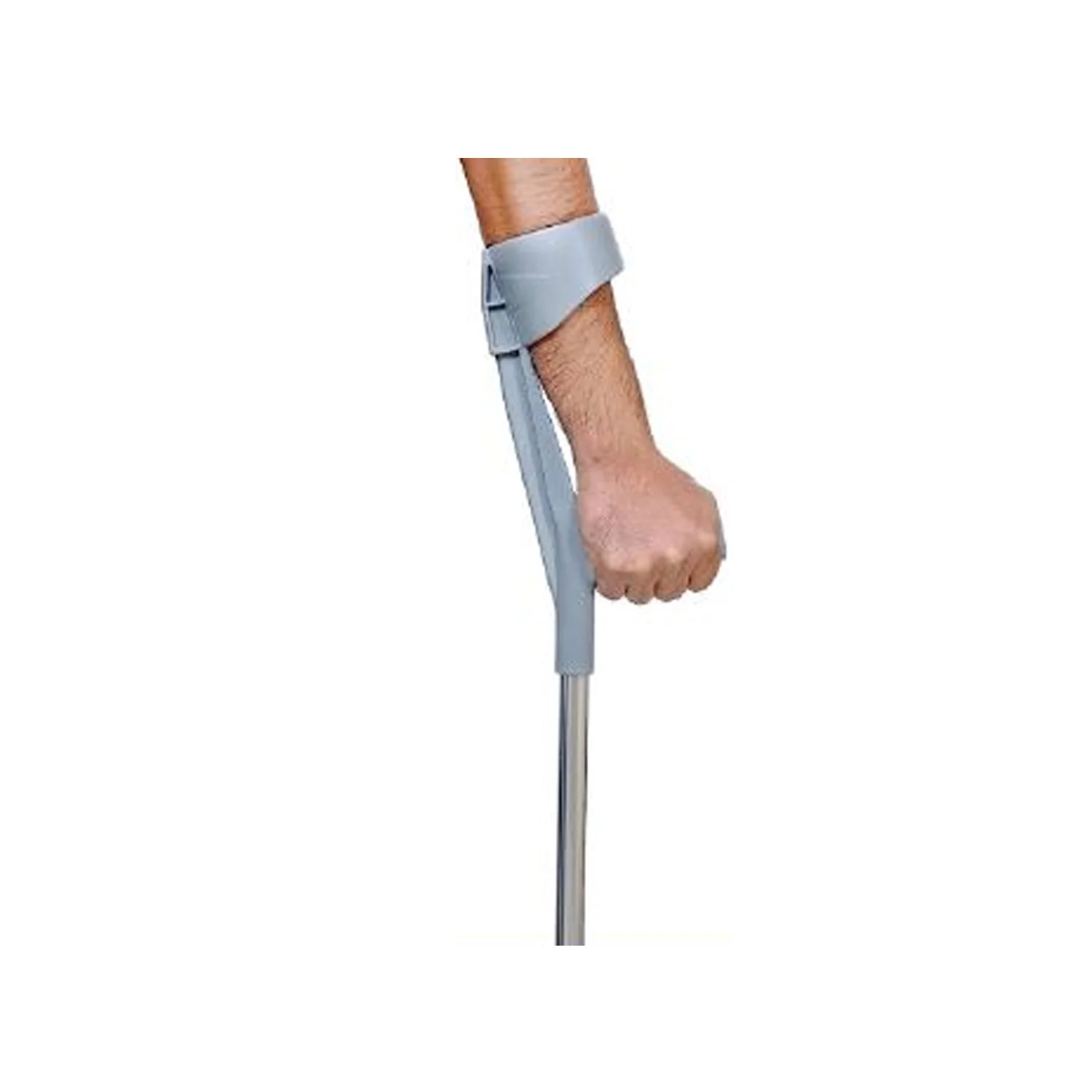
Your hands should take the weight through the crutch handles. Leaning heavily on the top of the crutches can put pressure on the nerves and blood vessels around the armpit. May cause discomfort.
3. Check the crutches before use
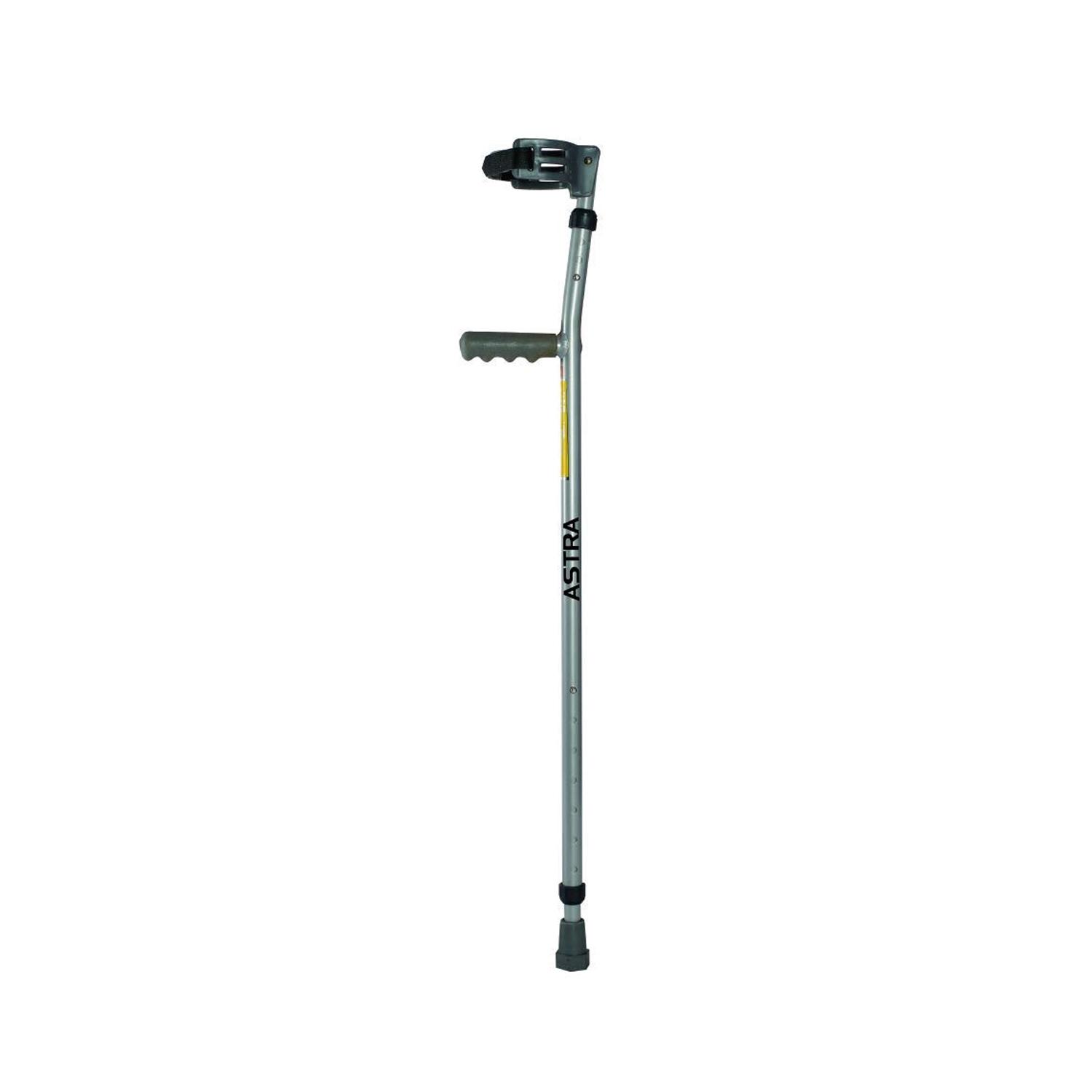
Look at the rubber tips or ferrules at the bottom of the crutches. They should be secure. Have enough tread. Also check that the adjustment buttons are properly locked, there are no damaged parts, the rubber tips are not excessively worn and the crutches are stable before you start walking.
These simple checks can reduce the risk of slipping or the crutches suddenly changing position.
Crutches do more than simply keep an injured leg off the ground. They change your normal walking pattern and shift some of the physical demand to your arms and upper body. A review of crutch biomechanics found that crutch walking is generally slower and less energy-efficient than normal walking and can place additional strain on the upper extremities. (2)
This is why correct positioning, appropriate crutch height and learning the right walking pattern matter. Walking with crutches should feel controlled rather than like a race to get from one place to another.
How to Walk With Crutches Without Putting Weight on an Injured Leg
The movement is simple once you break it down.
Step 1: Stand with weight placed on your leg.
Keep your injured leg off the ground.
You may hold your leg slightly in front of you with the knee gently bent depending on what feels comfortable and what your healthcare professional has shown you.
Make sure you are balanced before taking the step.
Step 2: Move both crutches
Place both crutches one step ahead of you.
Keep crutches apart so that a stable base is formed.
Do not place crutches far forward because you may lose balance.
Step 3: Put weight through your hands.
Press down through the handles of crutches.
Your arms and crutches should support your body while your injured leg remains off the ground.
Step 4: Move your leg forward.
Using crutches for support hop or swing your leg forward until your foot is roughly level with crutches.
Do not hop beyond crutches. Moving far forward can make you unstable.
Step 5: Pause and regain balance.
There is no need to rush.
Once your uninjured foot is down make sure you are balanced before moving crutches
Step 6: Repeat.
Move crutches forward again, support weight through hands and bring your leg forward.
The sequence is: crutches weight through hands → uninjured leg forward → regain balance → repeat.
This is the crutch walking technique for non‑weight‑bearing.
A Simple Way to Remember the Movement
If you are learning how to walk with crutches for the time think:
“Crutches first. Good leg second."
The injured leg stays off the floor.
Crutches create support in front of you. Your uninjured leg moves forward between crutches.
Practise slowly rather than trying to copy someone else's walking speed.
How to Stand Up Using Crutches
Standing up can be more difficult than walking because you need to shift weight before your crutches are positioned for walking.
To stand:
Sit towards the edge of a chair.
Keep leg off the ground.
Hold both crutches in one hand usually on the side of injured leg.
Push up from chair with hand.
Use your legs to help you stand.
Once standing and balanced, place one crutch in each hand.
Position crutches in front of you before beginning to walk.
Do not try to stand by pulling yourself up using the underarm supports of crutches.
How to Sit Down With Crutches
Sitting down requires the principle: keep the injured leg off the ground and make sure the chair is stable.
Walk toward the chair using crutches.
Turn slowly using steps on your uninjured leg.
Continue until you can feel the chair behind your legs.
Keep your legs off the floor.
Remove arms from crutches.
Hold both crutches together in one hand.
Reach back for the chair with your hand.
Slowly lower yourself into the chair.
Avoid swivelling or twisting quickly. Small controlled movements are safer.
How to Turn While Walking With Crutches
Turning can be one of the ways to lose balance.
Instead of making a quick pivot:
Slow down.
Keep your legs off the ground.
Take small steps with an uninjured leg.
Move crutches gradually as you turn.
Avoid twisting
Think of turning as a series of movements rather than one large movement.
Can You Use Stairs With Crutches?
Stairs are considerably more challenging when you are non‑weight‑bearing.
If you have not been taught how to use crutches on stairs by a physiotherapist or healthcare professional do not try to work out technique on your own.
If stair use is necessary use handrail where possible. Have someone nearby until you are confident with technique. Some patients may be advised to use a method, such as moving up or down stairs while seated depending on injury and mobility.
For non‑weight‑bearing stair walking clinical instructions generally involve keeping the leg off the ground and transferring weight through crutches and uninjured leg. However the safest method depends on strength, balance, injury and type of crutches you have.
Common Mistakes to Avoid When Walking With Crutches
Learning how to use crutches is not about knowing the correct movement. It is also about avoiding habits that make you unstable.
Putting weight on armpits
Hands should support weight through crutch handles. Avoid leaning on underarm supports. Crutch walking changes the forces placed on the body. Research comparing standard and ergonomically designed crutches has found differences in joint loading and underarm pressure during walking.(3)
Placing crutches far forward
This can make it harder to control the body. Move crutches about one step ahead and regain balance before continuing.
Hopping beyond crutches
It may feel faster. Hopping beyond crutches can shift the centre of balance too far forward. Bring foot up to crutches instead.
Looking constantly at feet
It is natural to watch feet when learning. However once comfortable try to look rather than continuously looking down. This helps notice obstacles and maintain awareness of surroundings.
Moving quickly
Crutch walking is not a race. Short controlled movements are safer than trying to move at walking speed.
Carrying things in hands
If both hands are needed to operate crutches carrying a cup, plate or heavy object can be difficult and unsafe. Consider using a backpack or other hands‑free option for lightweight items.
One reason non weight bearing with crutches can be difficult is that people may not always accurately reproduce a prescribed amount of weight-bearing while walking. Research examining crutch gait found considerable variation when participants were asked to reproduce specific weight-bearing levels.(4)
This is important if your doctor has given you a specific weight-bearing restriction. If you are unsure whether you are accidentally putting weight through the injured leg, ask your physiotherapist to watch your technique rather than trying to judge it yourself.
Make Your Home Safer While You Recover
Walking with crutches can be especially difficult in a home.
Before starting to move regularly look for common hazards such as:
Loose rugs
Wet floors
Cluttered walkways
Electrical cords
Uneven flooring
Slippery bathroom surfaces
Poor lighting
Objects left on stairs
Keep frequently used items within easy reach so that you do not have to repeatedly cross the house.
Wear footwear on uninjured feet rather than walking in slippery socks. NHS guidance also recommends avoiding floors and other outdoor hazards such as wet leaves or ice when using crutches.
What If You Are Struggling to Walk With Crutches?
Crutches are not suitable for everyone.
If you have weakness, poor balance, severe pain or difficulty coordinating movement, tell a healthcare provider or physiotherapist. Another mobility aid, such as walker may sometimes be more appropriate.
You should also ask for help if:
You repeatedly lose balance.
Crutches feel unstable.
Hands or arms become very painful.
You cannot keep your legs off the ground.
You are unsure how much weight you are allowed to put on injured leg.
You are struggling with stairs.
Injury becomes more painful or swollen, after activity.
Weight‑bearing instructions should come from clinician managing injury.
How Long Will You Need Crutches?
The time you need crutches depends on why you use crutches, the injury or surgery, how well the tissues heal and the weight‑bearing instructions from your doctor.
For example someone healing from a fracture may have different restrictions than someone healing from a soft‑tissue injury or surgery.
Do not stop using crutches simply because you feel better. Feeling pain does not mean that the injured bone, joint, ligament or other tissue is ready to support your full body weight.
Follow the progression recommended by your doctor or physiotherapist.
The Difference Between Non‑Weight‑Bearing and Partial Weight‑Bearing
One important thing to understand when learning how to walk with crutches is that not every person uses the same walking pattern.
Non‑Weight‑Bearing
The injured leg stays completely off the ground.
Your weight is supported by the crutches and uninjured leg.
Toe‑touch weight‑bearing
The toes may touch the floor lightly for balance. You should not put significant weight through the injured leg.
Partial weight‑bearing
Some weight is allowed through the injured leg. Your healthcare professional should tell you how much.
Weight‑bearing as tolerated
You may be allowed to put weight through the leg based on your comfort and clinical instructions.
Because these categories have different meanings, do not follow a non‑weight‑bearing technique if your doctor has given you different instructions or follow a different technique.
If you are unsure whether crutches, a walker or another mobility aid is more appropriate for your situation, you can also read our guide on when you may need walking aids.
Conclusion
Learning how to walk with crutches is mainly about control, balance and following your weight‑bearing instructions.
If you have been told to remain non‑weight‑bearing remember the sequence:
Crutches forward → weight through your hands → uninjured leg forward → regain balance → repeat.
Keep the leg off the ground, move slowly and avoid rushing through turns, chairs or stairs.
If you are struggling with your crutch walking technique do not simply push through it. A physiotherapist or healthcare professional can check your crutch height, walking pattern and balance and help you find the way to move while your leg heals.
Disclaimer: This article is for general educational purposes and does not replace advice from your doctor, orthopaedic specialist or physiotherapist. Your weight‑bearing restrictions may vary depending on your injury, surgery and stage of recovery.
References:
The energy expenditure of non-weight bearing crutch walking on the level and ascending stairs - 2015 Jun - https://pubmed.ncbi.nlm.nih.gov/25891530/
Walking assistance using crutches: A state of the art review - Nov 14 - https://pubmed.ncbi.nlm.nih.gov/31831139/
Ergonomically Designed Crutches Decrease Ground Reaction Forces, Joint Moments, and Underarm Pressure Compared to Standard Crutches During Walking - 2026 Mar - https://pubmed.ncbi.nlm.nih.gov/41416753/
Three-point gait crutch walking: variability in ground reaction force during weight bearing - 2001 Jan - https://pubmed.ncbi.nlm.nih.gov/11239291/