

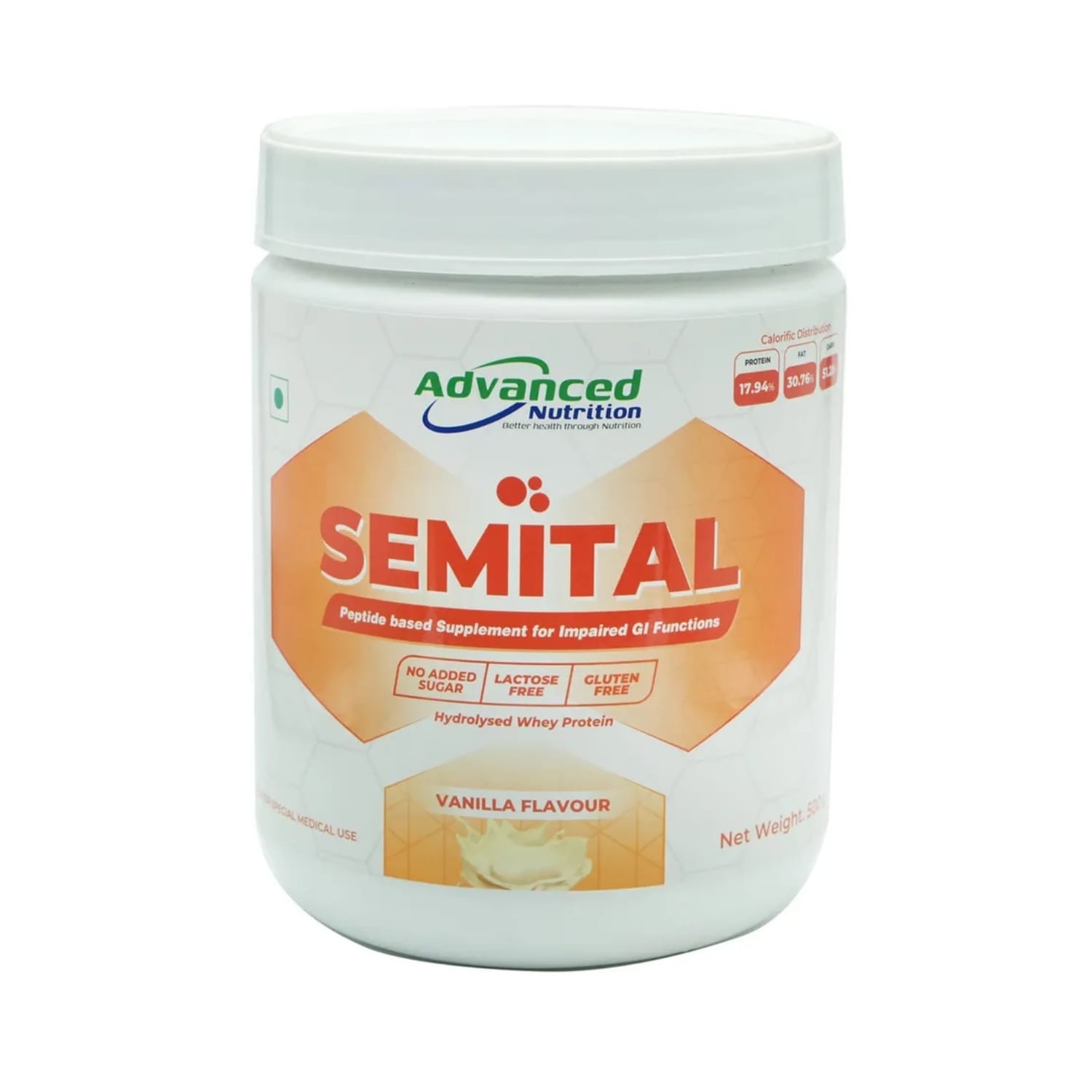
Semital Peptide based Supplement for Impaired GI Functions Vanilla Flavour 500g (Jar Pack)
British Biologicals
₹1,07812% off₹1,225
Lactose intolerance is a digestive condition in which the body is unable to properly digest lactose, the natural sugar found in milk and dairy products. This happens due to low levels of lactase, an enzyme produced in the small intestine. When lactose is not digested, it ferments in the gut, leading to digestive discomfort. Lactose intolerance is common in both adults and children and varies in severity from person to person.
Causes of Lactose Intolerance
Lactase Enzyme Deficiency: Reduced production of lactase with age
Genetic Factors: More common in certain ethnic groups
Digestive Disorders: Conditions like IBS, celiac disease, or Crohn’s disease
Gut Infections: Temporary lactose intolerance after stomach infections
Intestinal Injury or Surgery: Affecting enzyme production
Premature Birth (in infants): Underdeveloped digestive systems
Symptoms of Lactose Intolerance
Bloating after consuming milk or dairy
Abdominal pain or cramps
Diarrhea
Excess gas or flatulence
Nausea or vomiting
Stomach rumbling or discomfort
Symptoms usually appear within 30 minutes to 2 hours after consuming lactose-containing foods.
Diagnosis of Lactose Intolerance
Dietary History: Symptom tracking after dairy intake
Lactose Tolerance Test: Measuring blood sugar response
Hydrogen Breath Test: Detects undigested lactose fermentation
Elimination Diet: Removing lactose to see symptom improvement
Stool Acidity Test: Mainly used in children
Treatment of Lactose Intolerance
Dietary Modification: Limiting or avoiding lactose-containing foods
Lactose-Free Alternatives: Lactose-free milk or plant-based options
Lactase Supplements: Taken before consuming dairy
Gut Health Support: Probiotics to improve digestion
Balanced Nutrition: Ensuring adequate calcium and vitamin D intake
Treating Underlying Conditions: If lactose intolerance is secondary
Preventing Lactose Intolerance Symptoms
Read food labels carefully
Consume small amounts of dairy if tolerated
Choose fermented dairy like yogurt or curd
Use lactase enzyme supplements when needed
Maintain gut health with fiber and probiotics
Ensure non-dairy calcium sources in diet
Complications of Untreated Lactose Intolerance
Chronic digestive discomfort
Poor nutrient intake (calcium, vitamin D)
Weak bone health over time
Reduced quality of life due to dietary restrictions
Specialist to Consult for Lactose Intolerance
Gastroenterologist: For digestive evaluation and diagnosis
Dietitian/Nutritionist: For balanced lactose-free meal planning
Pediatrician: For initial assessment and guidance
FAQs
1. What is lactose intolerance?
Lactose intolerance is the inability to digest lactose due to low levels of the lactase enzyme, leading to digestive symptoms after consuming dairy.
2. Is lactose intolerance permanent?
In many adults it is long-term, but in some cases it may be temporary, especially after gut infections or digestive illnesses.
3. Can lactose intolerance be cured?
There is no cure, but symptoms can be effectively managed with dietary changes, lactose-free products, and supplements.
4. Can people with lactose intolerance consume any dairy?
Some people can tolerate small amounts of dairy, especially yogurt or fermented products, depending on their sensitivity.
5. Which formula milk powder is best for a lactose-intolerant kid?
For infants with lactose intolerance, a lactose-free formula like Similac Isomil Lactose Free Infant Formula is commonly recommended. It’s a soy-based, lactose-free infant milk substitute formulated to be gentle on the digestive system and support healthy growth and nutrient intake in babies from birth to 24 months. It helps reduce gas, diarrhea, and spit-ups often seen with lactose intolerance while providing essential vitamins and minerals for development.