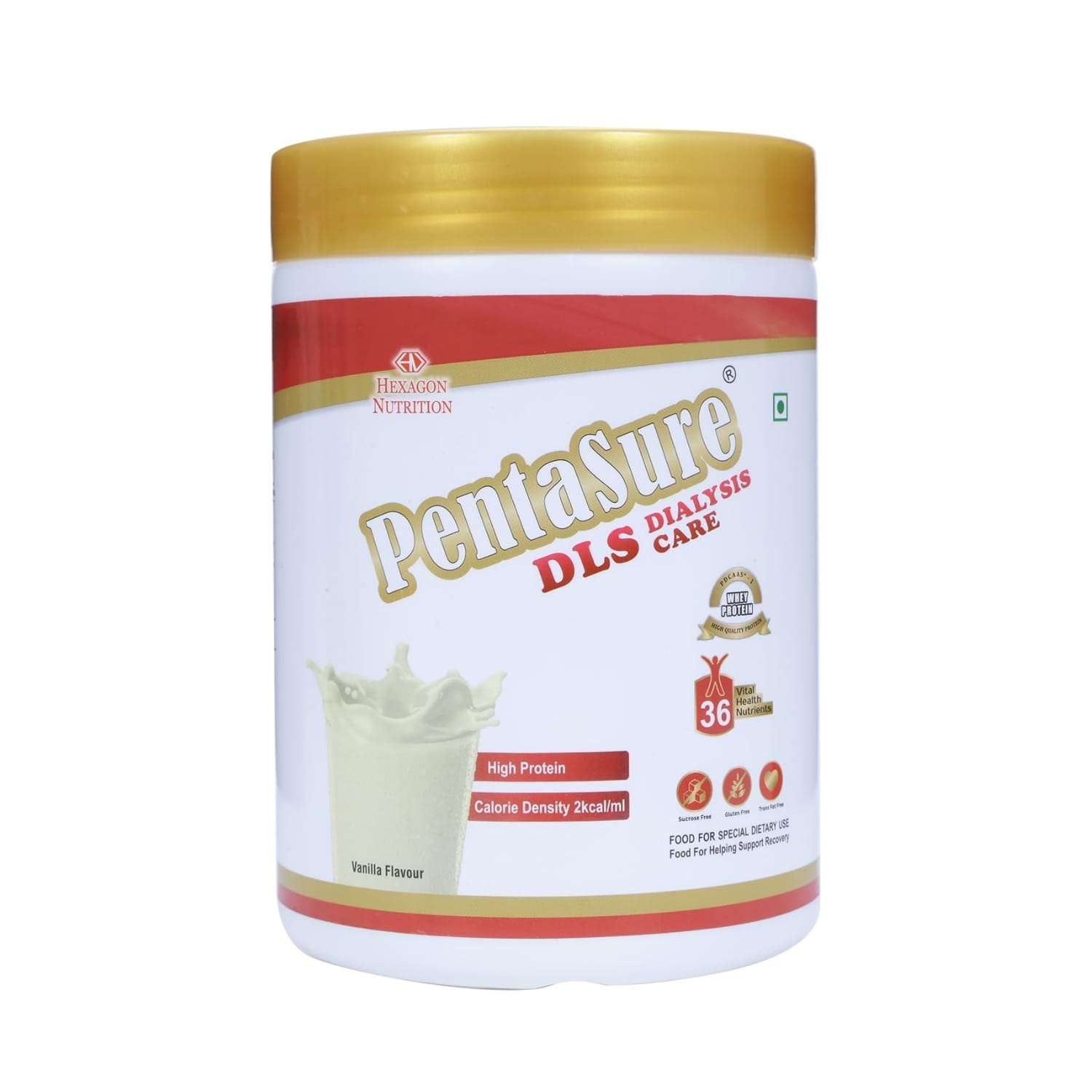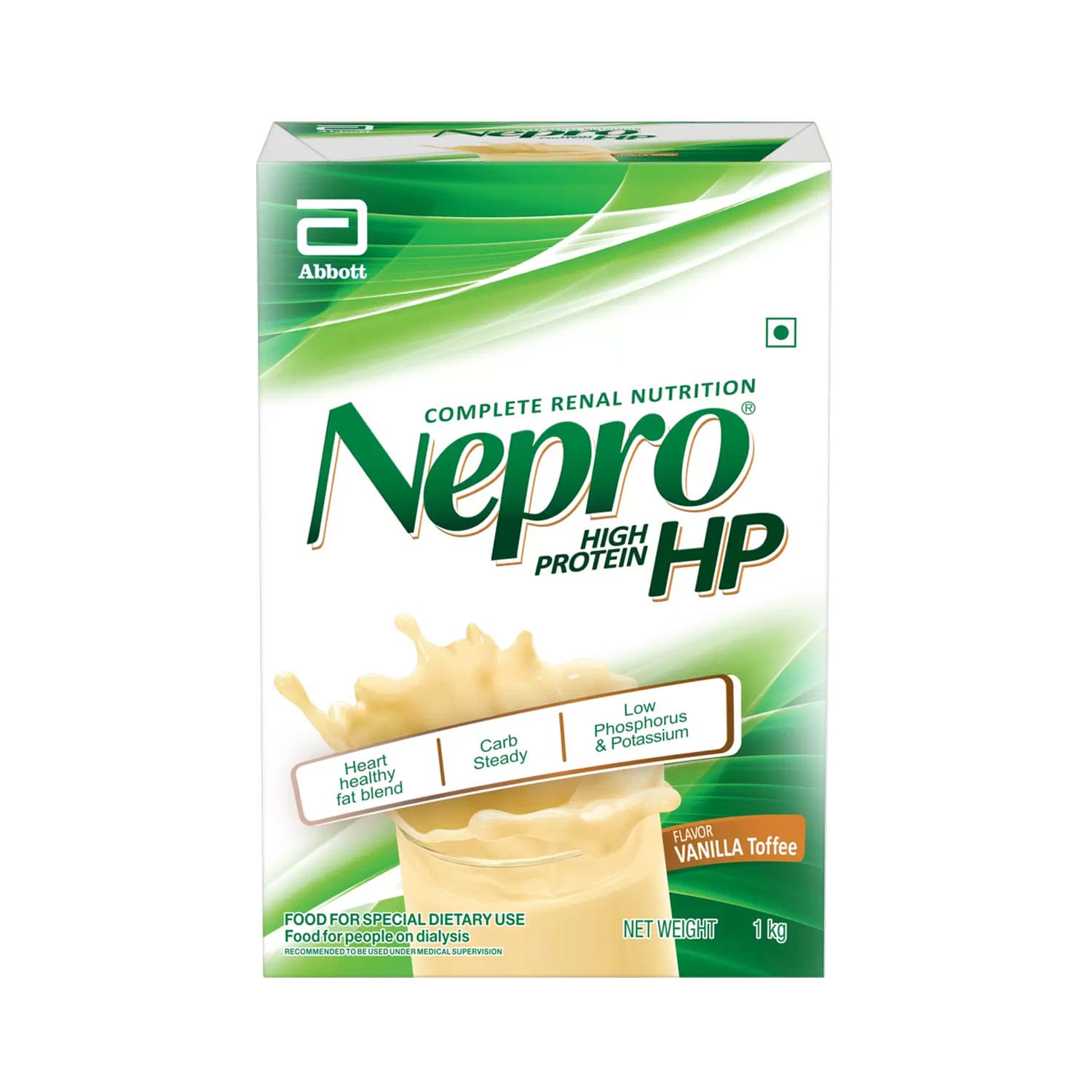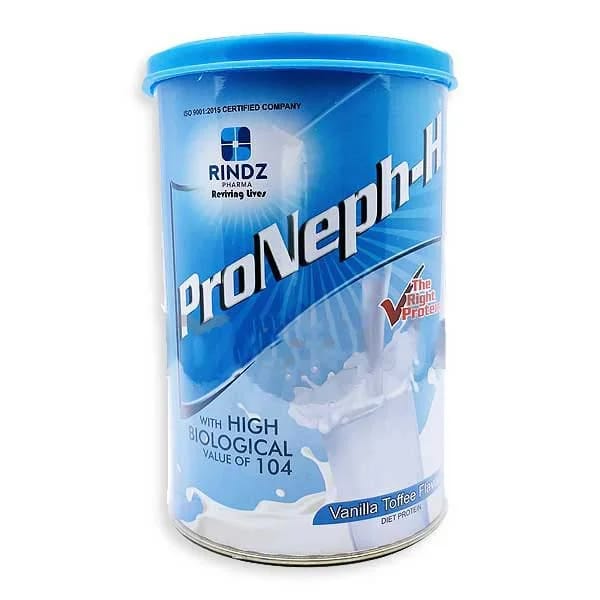


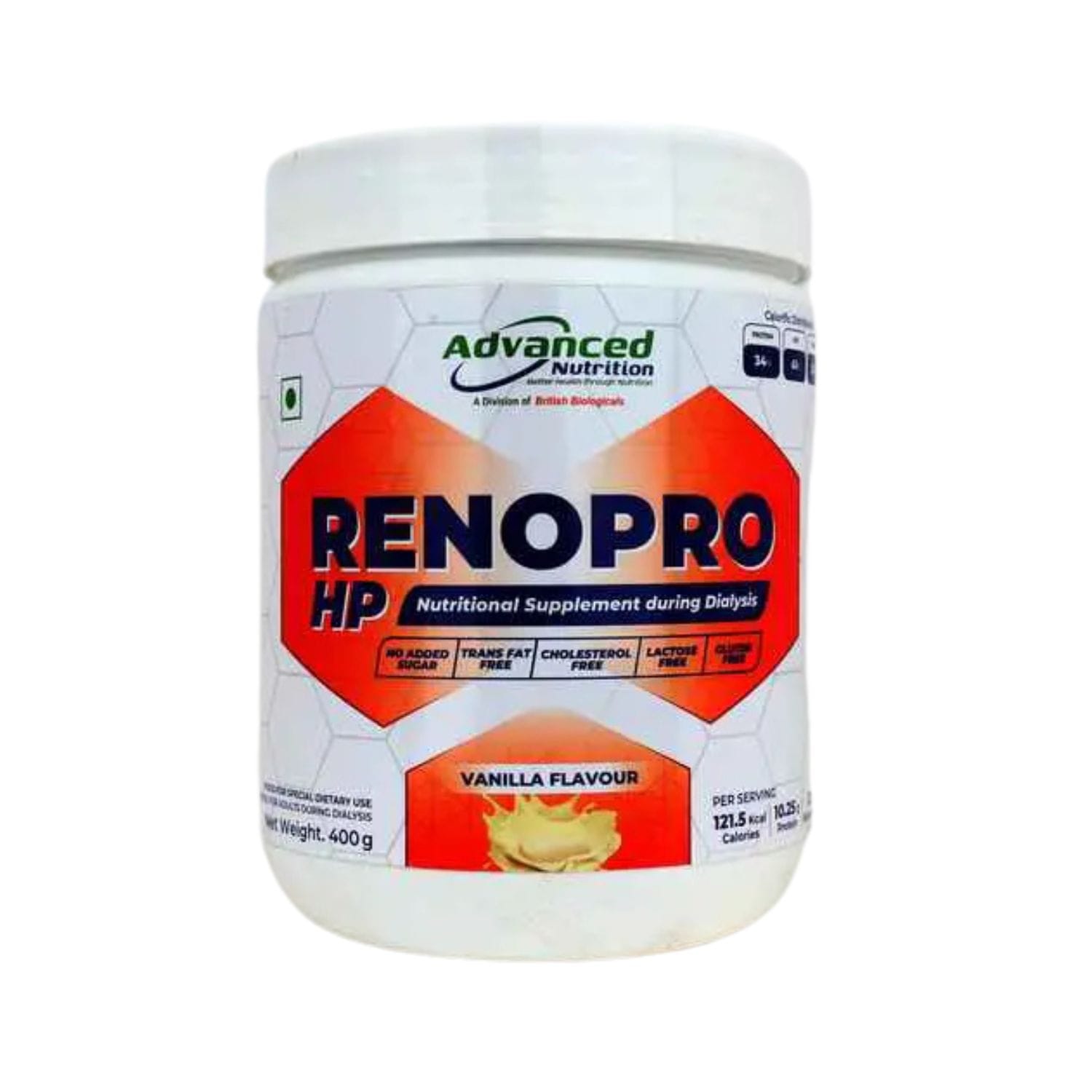
Renopro HP Nutritional Powder during Dialysis Vanilla Flavour – 400g (Jar Pack)
British Biologicals
₹82312% off₹935
Dialysis
Dialysis is a medical treatment that helps remove waste products, excess fluids, and toxins from the blood when the kidneys are unable to function properly. It is commonly required in people with advanced chronic kidney disease or kidney failure. Dialysis helps maintain fluid balance, electrolyte levels, and overall health when kidney function is severely reduced.
Causes Requiring Dialysis
Chronic Kidney Disease: Long-term damage to the kidneys that gradually reduces their ability to filter blood.
Diabetes: High blood sugar levels over time can damage kidney blood vessels and lead to kidney failure.
High Blood Pressure: Poorly controlled blood pressure strains kidney function and accelerates damage.
Acute Kidney Injury: Sudden kidney failure due to infection, dehydration, or severe illness.
Glomerulonephritis: Inflammation of kidney filtering units affecting waste removal.
Inherited Kidney Disorders: Conditions such as polycystic kidney disease.
Symptoms Indicating Need for Dialysis
Severe fatigue and weakness
Swelling of legs, ankles, or face due to fluid retention
Shortness of breath
Nausea or vomiting
Loss of appetite
Reduced urine output
Confusion or difficulty concentrating
Diagnosis Before Dialysis
Blood tests to assess kidney function levels
Urine tests to evaluate kidney damage
Imaging tests such as ultrasound
Assessment of fluid balance and symptoms
Evaluation by a nephrologist
Types of Dialysis
Hemodialysis: Blood is filtered through a machine to remove waste and excess fluid.
Peritoneal Dialysis: Uses the lining of the abdomen to filter blood through a dialysis solution.
Treatment and Care During Dialysis
Scheduled dialysis sessions as advised
Fluid and dietary restrictions
Medications to manage blood pressure and anemia
Nutritional support including protein management
Monitoring weight and fluid intake
Infection prevention at access sites
Preventing Dialysis-Related Complications
Follow dialysis schedule consistently
Maintain proper hygiene at access sites
Adhere to kidney-friendly diet plans
Monitor blood pressure and sugar levels
Attend regular medical checkups
Complications of Untreated Kidney Failure
Fluid overload and heart complications
Electrolyte imbalance
Severe fatigue and weakness
Infections
Life-threatening toxin buildup
Specialist to Consult for Dialysis
Nephrologist: For kidney disease management and dialysis planning
Dietitian: For kidney-friendly nutritional guidance
FAQ
Which protein powder is good for dialysis patients?
Protein powders designed specifically for dialysis patients help meet protein needs without excess potassium or phosphorus. Choosing renal-friendly protein supplements supports muscle strength and recovery.
Can dialysis patients use nutritional supplements daily?
Dialysis patients can use nutritional supplements daily if recommended by a healthcare professional. Renal-specific supplements help maintain energy and nutrient balance.
Are dialysis care products useful at home?
Dialysis care products support hygiene, comfort, and infection prevention. They are especially helpful for patients managing dialysis routines at home.
What is the best nutrition support during dialysis?
Balanced nutrition support with controlled protein, fluids, and minerals is essential during dialysis. Specialized renal nutrition products help meet these requirements.
Is it safe to use supplements during dialysis?
Supplements are safe during dialysis when selected carefully and used under medical supervision. Always choose kidney-friendly formulations.