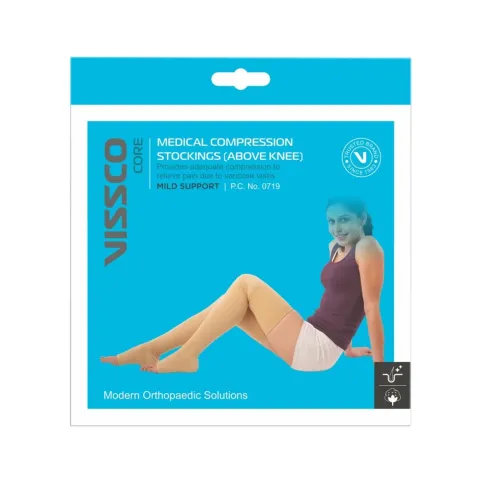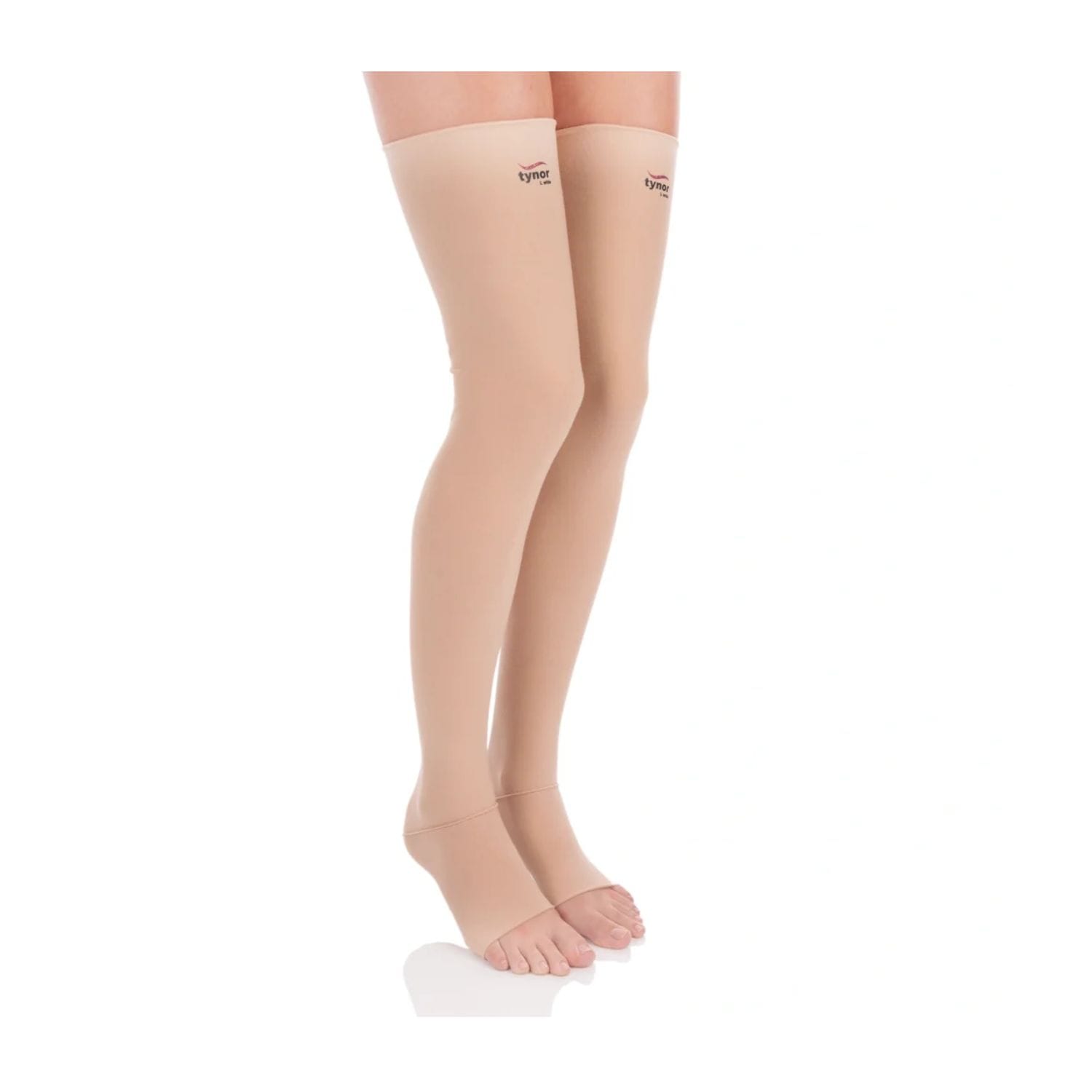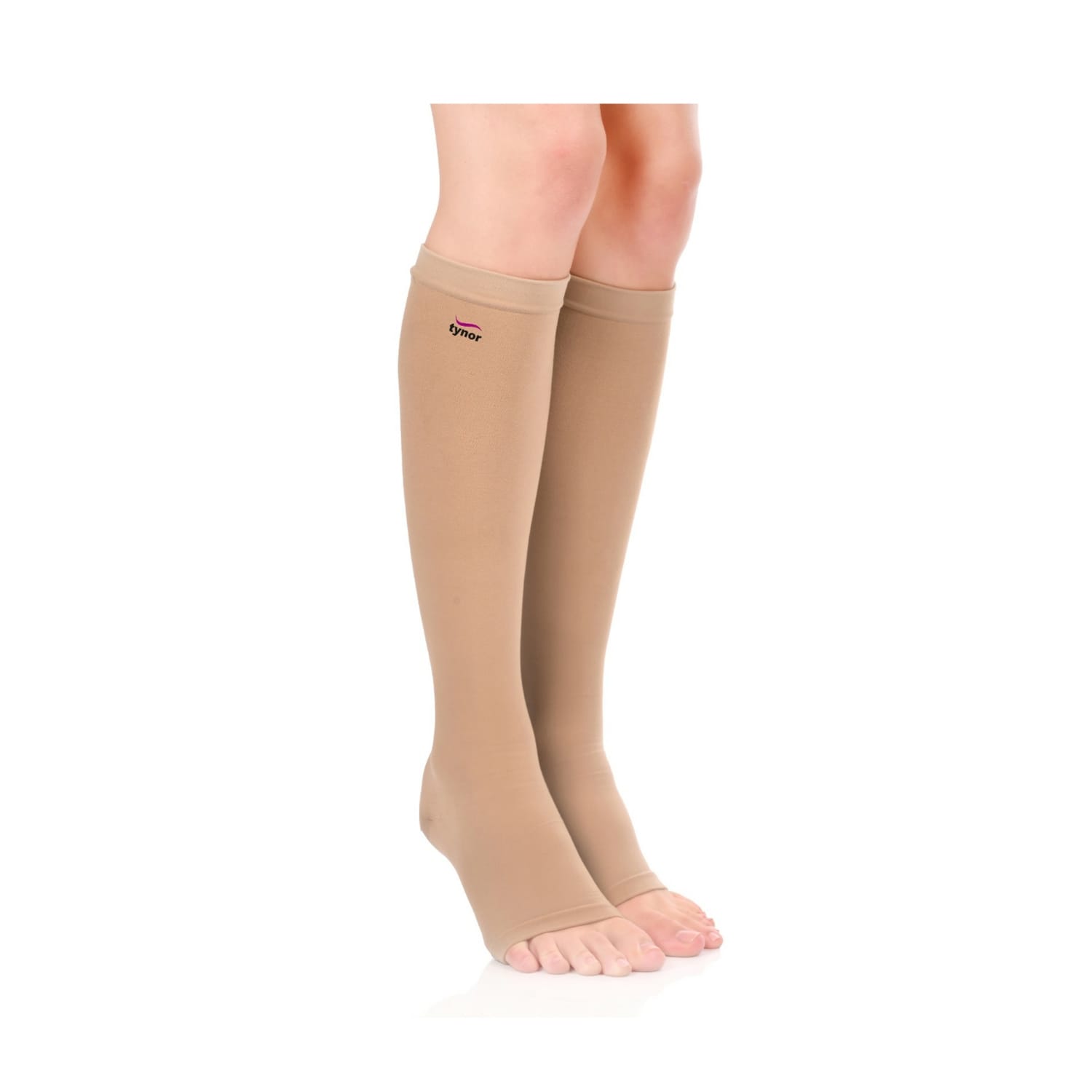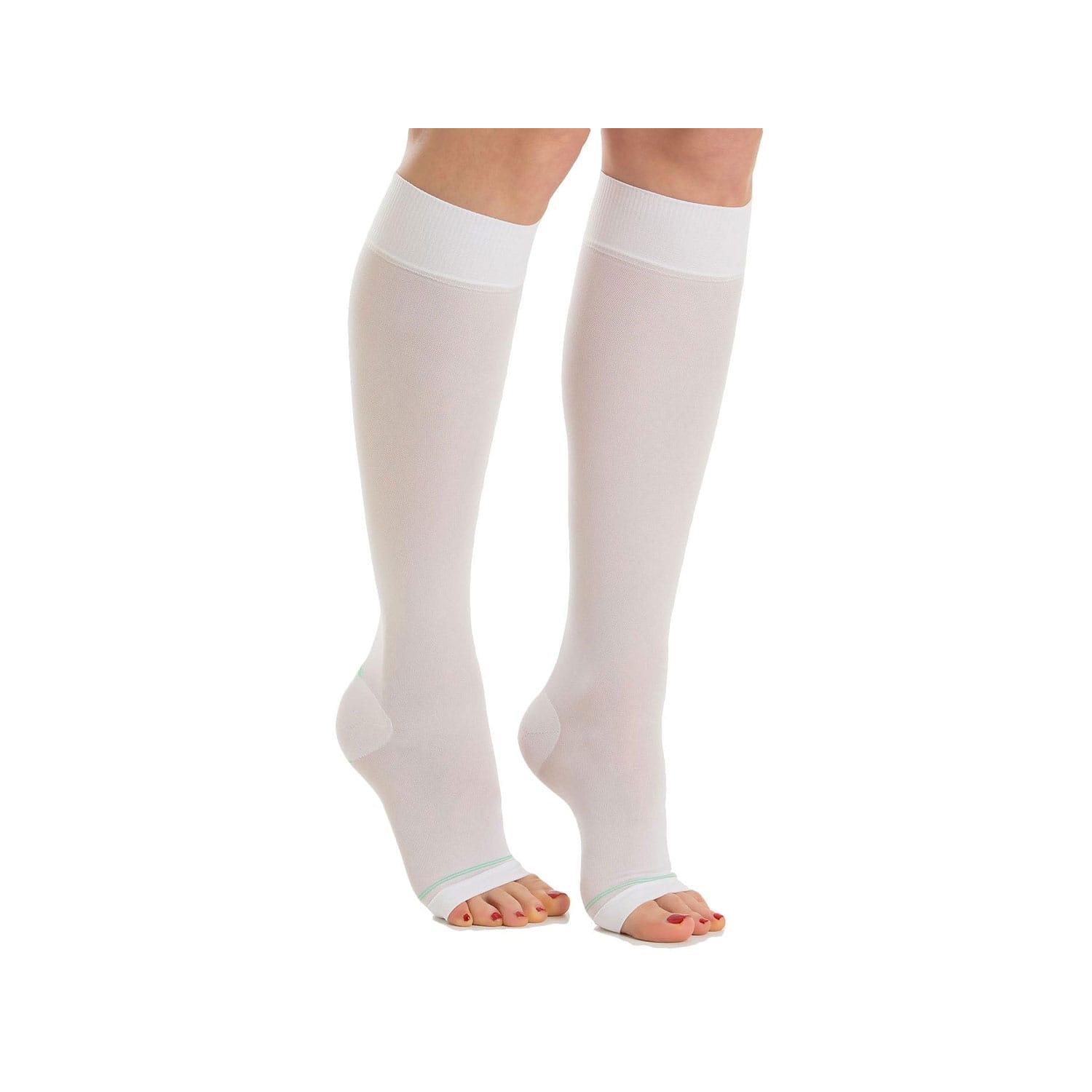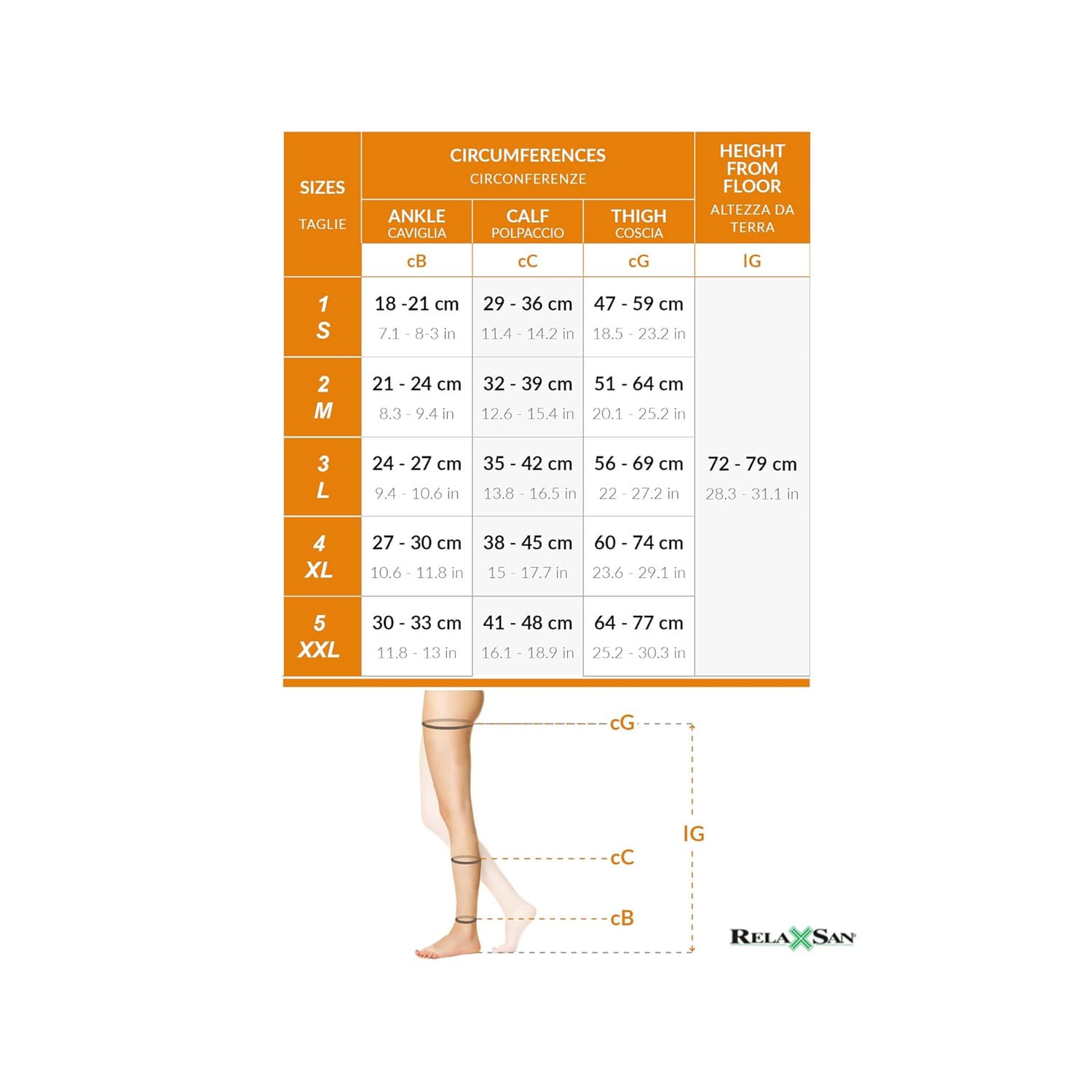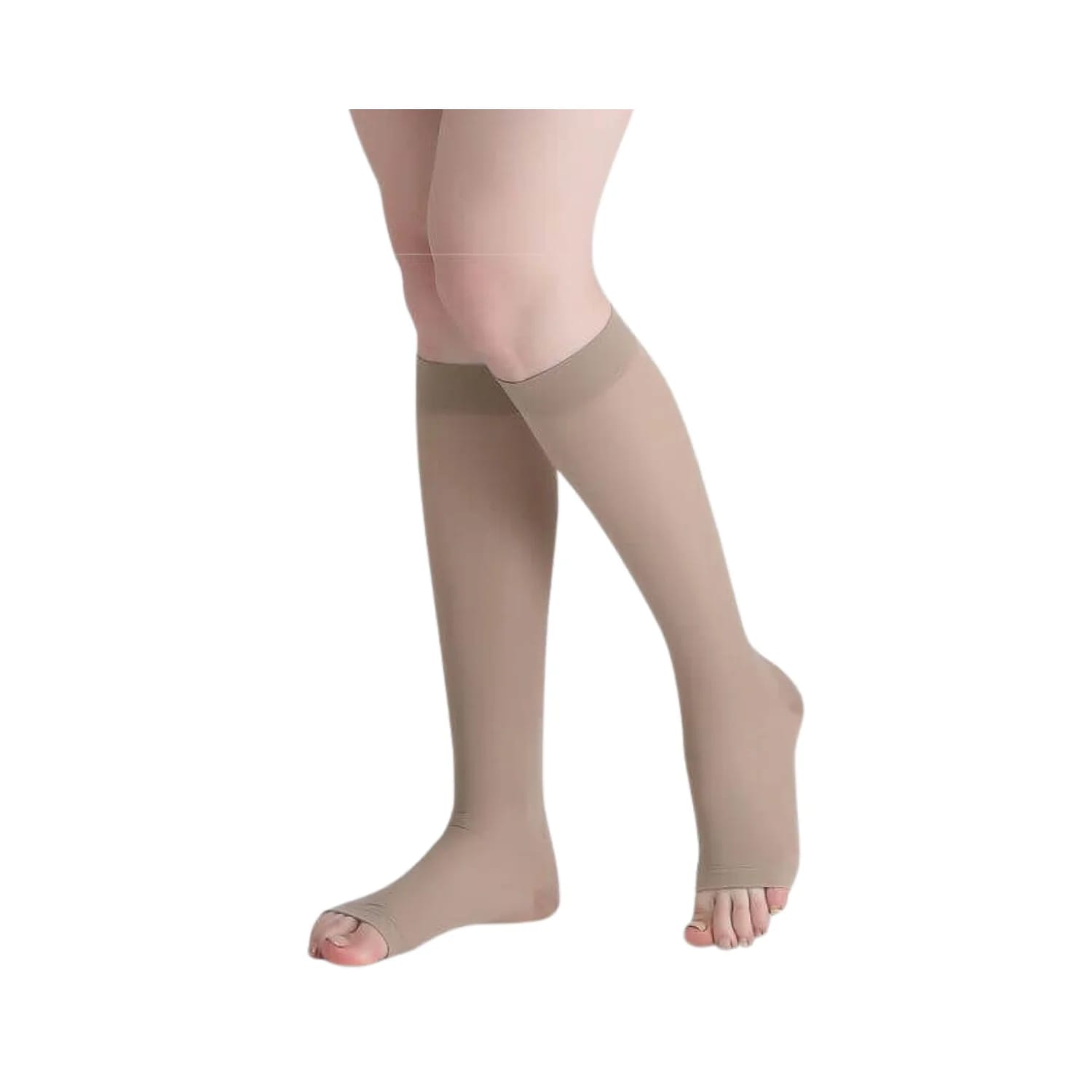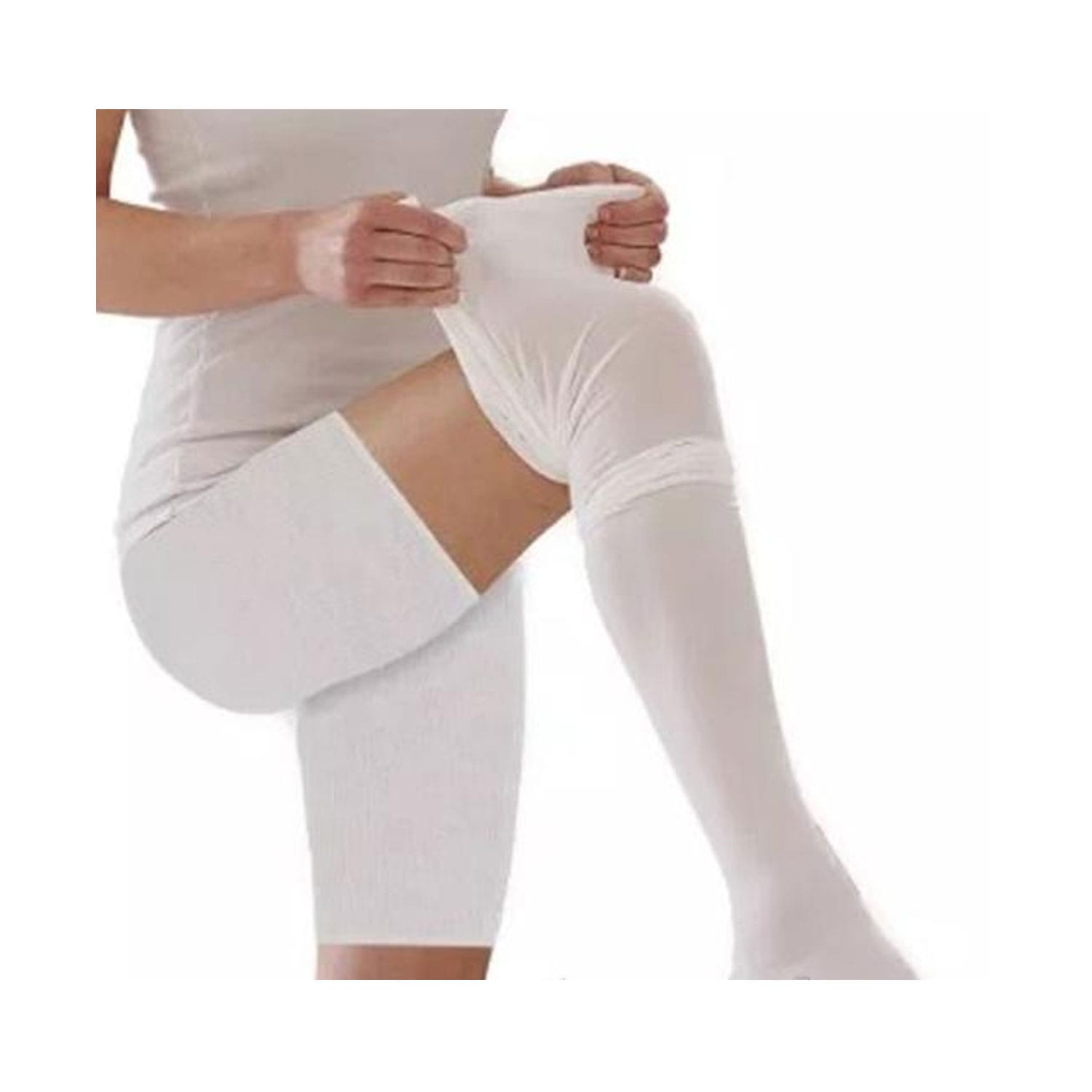



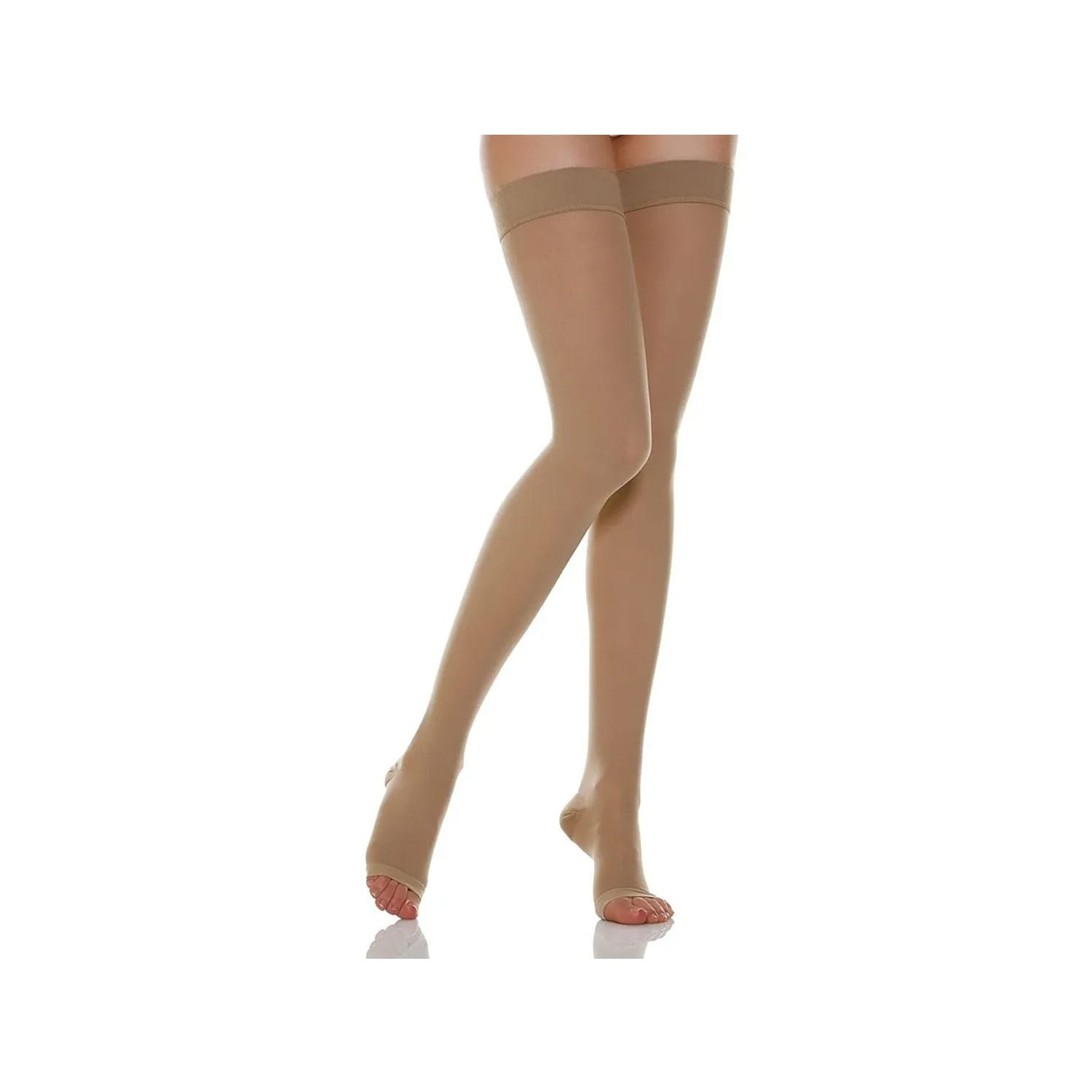
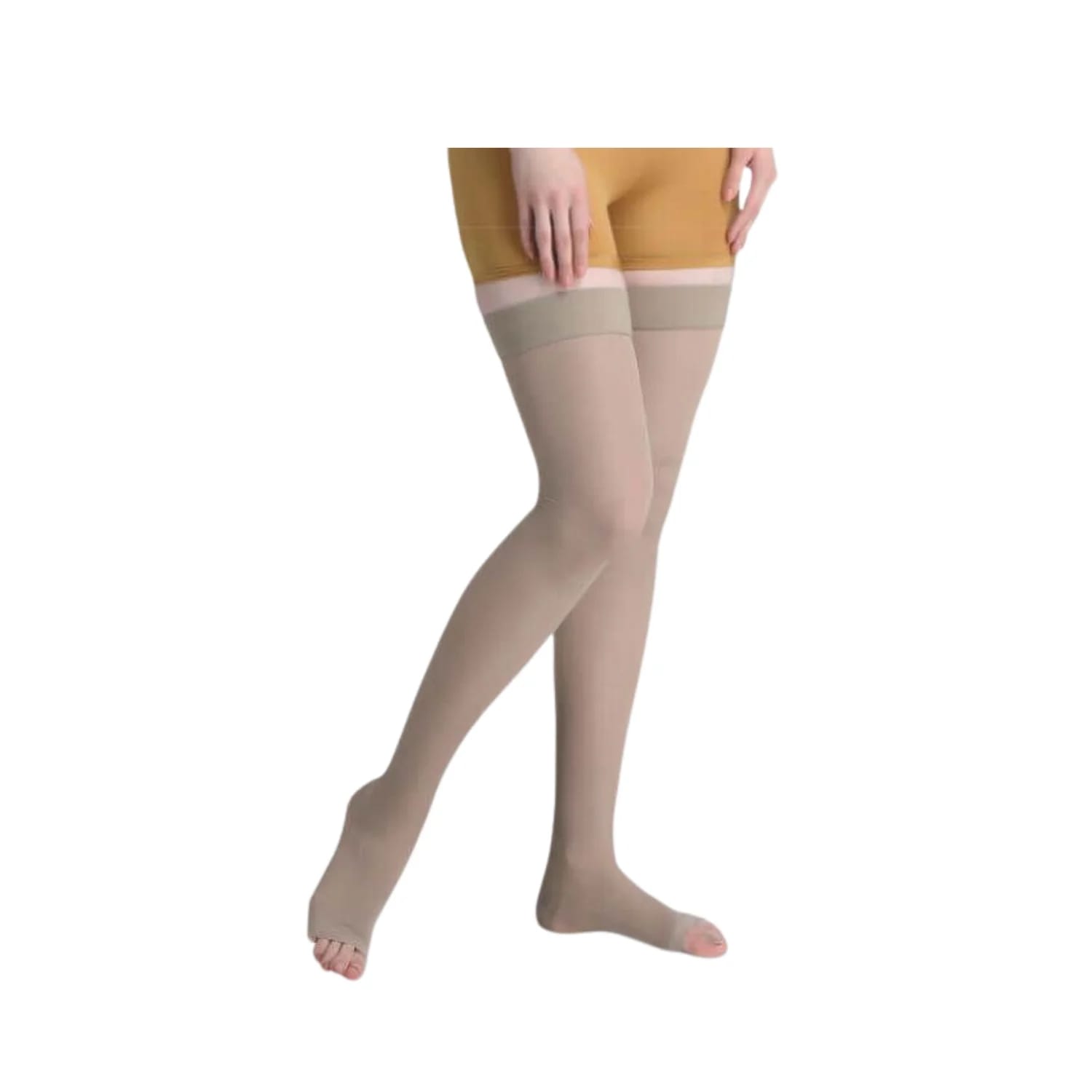
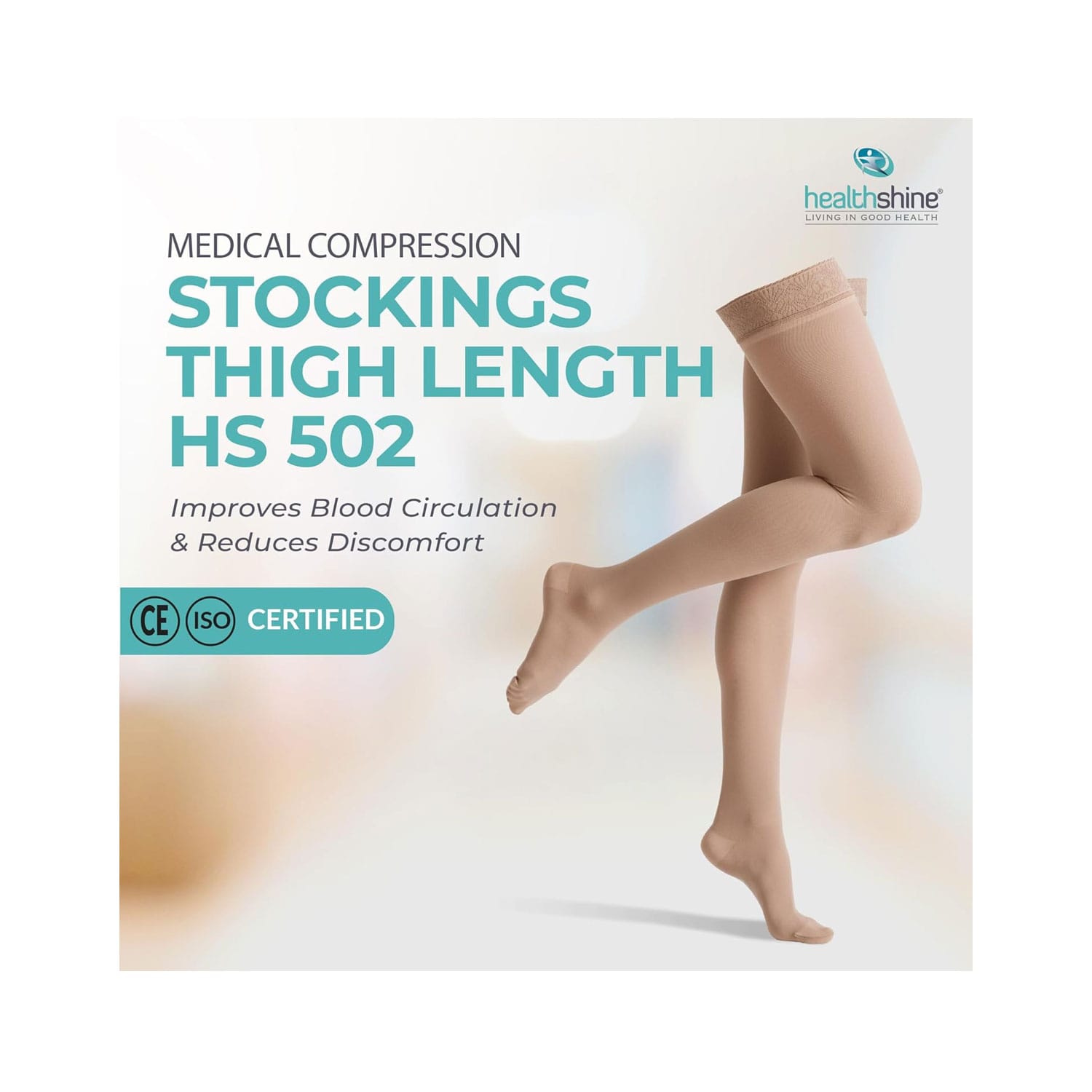
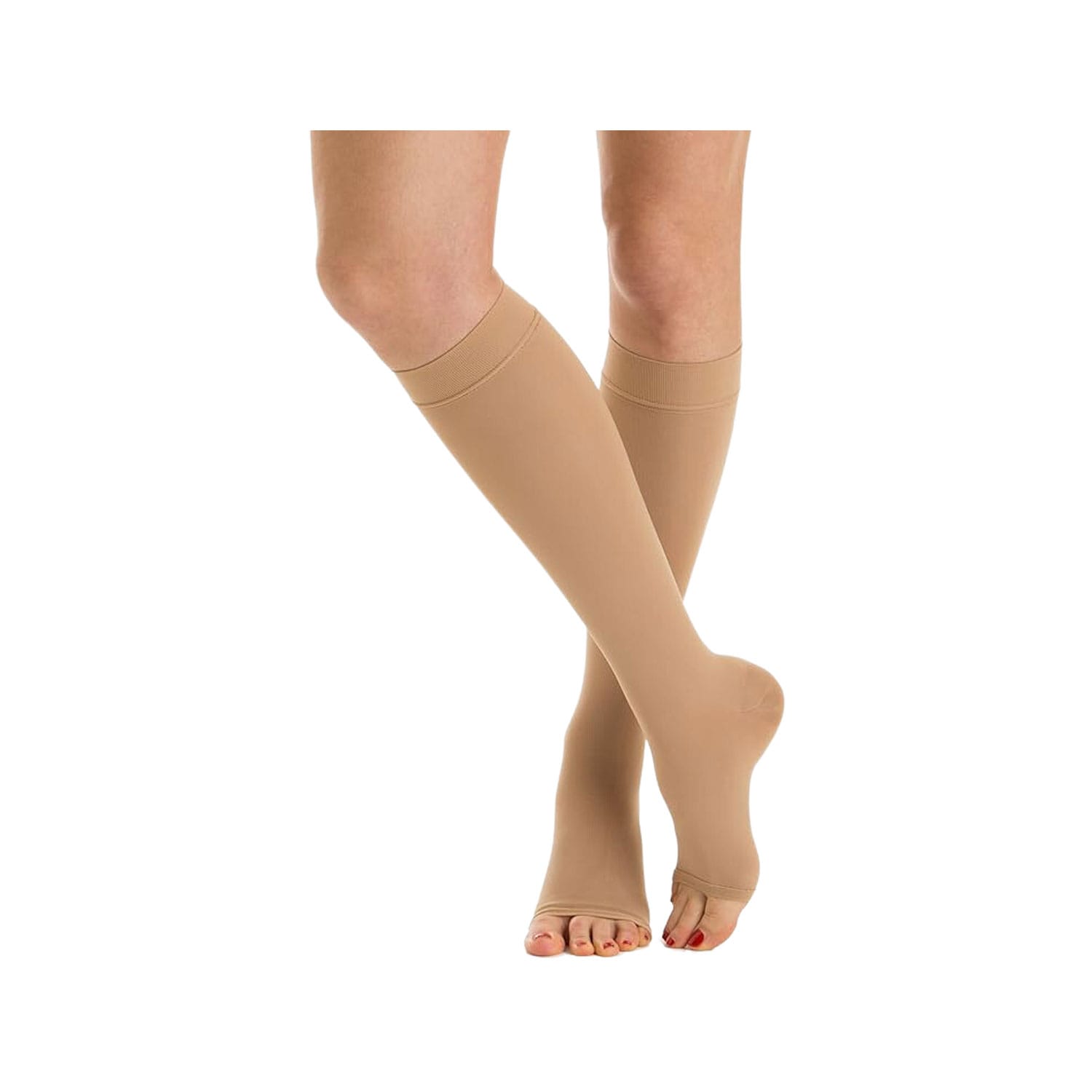
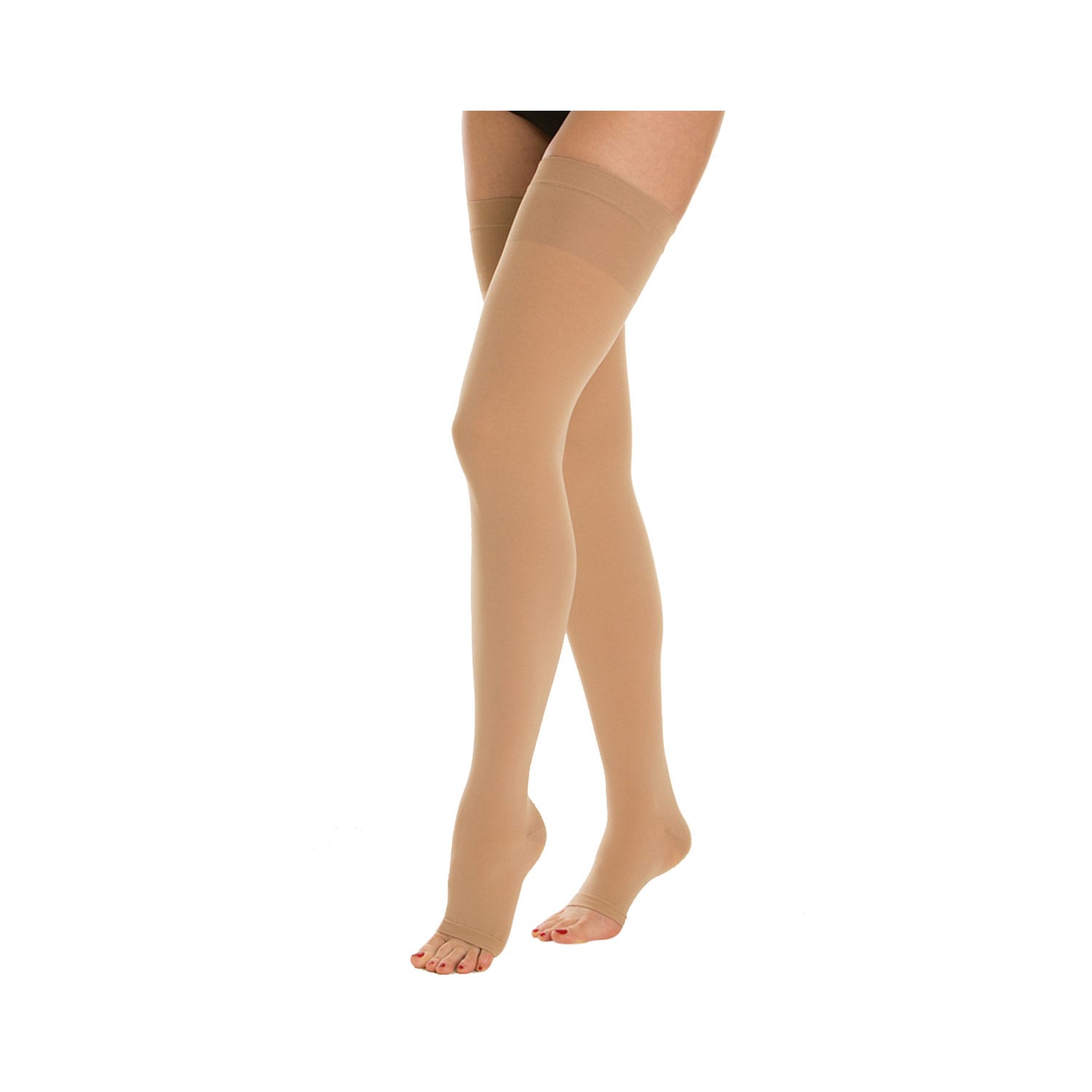
Relaxsan M970A Thigh High Open Toe Synthetic Stockings CCL-II 22-27mmHg Beige Colour Basic (XXL)
Relaxsan
₹3,82510% off₹4,250
Deep Vein Thrombosis (DVT)
Deep Vein Thrombosis (DVT) is a serious medical condition in which a blood clot (thrombus) forms in a deep vein, usually in the legs. This clot can block normal blood flow and cause swelling and pain. If the clot breaks loose and travels to the lungs, it can lead to a potentially life-threatening complication called pulmonary embolism (PE). Early detection and treatment are crucial to prevent serious outcomes.
Causes of Deep Vein Thrombosis (DVT)
* Prolonged Immobility: Long periods of sitting or bed rest, such as during long flights or hospital stays.
* Injury to a Vein: Trauma, surgery, or inflammation can damage blood vessels.
* Surgery: Especially orthopedic procedures like hip or knee replacement.
* Medical Conditions: Cancer, heart failure, or inflammatory bowel disease increase risk.
* Clotting Disorders: Inherited or acquired blood clotting abnormalities.
* Hormonal Factors: Birth control pills, hormone replacement therapy, or pregnancy.
* Obesity: Increases pressure on veins and impairs circulation.
* Smoking: Damages blood vessels and increases clotting risk.
* Age: Risk increases after age 60.
* Previous History of DVT or PE: Increases risk of recurrence.
Symptoms of Deep Vein Thrombosis (DVT)
* Swelling in One Leg: Often sudden and without an apparent cause.
* Pain or Tenderness: Typically in the calf or thigh, worsening with walking or standing.
* Warmth Over the Affected Area: Due to inflammation.
* Red or Discolored Skin: Skin may appear reddish or bluish.
* Leg Cramps: Often starting in the calf and worsening at night.
* Dilated Superficial Veins: Veins near the surface may become more visible.
* Asymptomatic: Some cases have no noticeable symptoms.
Diagnosis of Deep Vein Thrombosis (DVT)
* Physical Examination: To assess swelling, tenderness, and skin changes.
* D-Dimer Test: Blood test that measures clot breakdown products.
* Ultrasound Imaging: Most common method to detect clots in deep veins.
* Venography: Invasive imaging with dye injection, used in complex cases.
* MRI or CT Scans: May be used to detect clots in pelvic veins or lungs.
Treatment of Deep Vein Thrombosis (DVT)
* Anticoagulants (Blood Thinners): Help prevent clot growth and new clots from forming.
* Thrombolytics: Clot-dissolving medications used in severe or life-threatening cases.
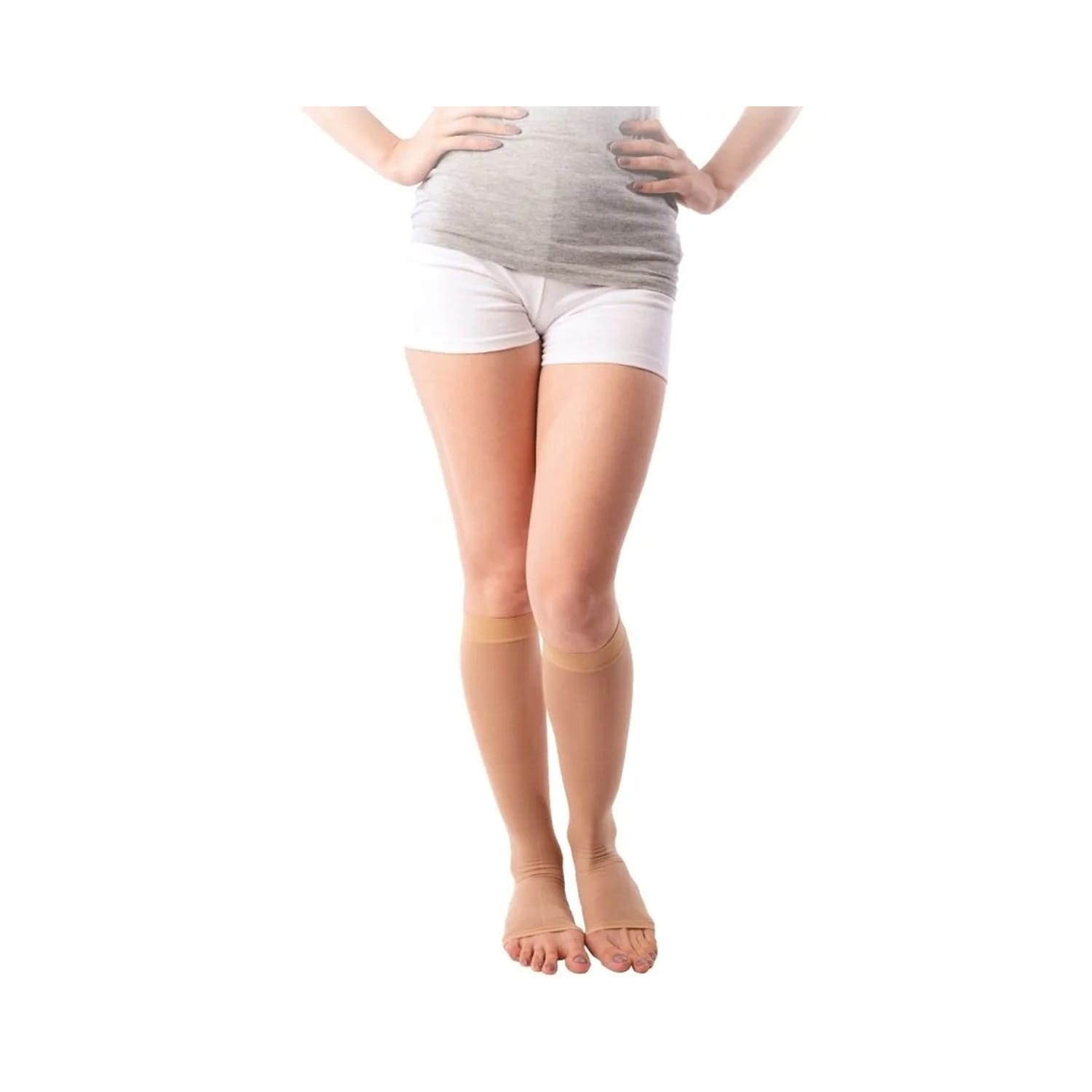
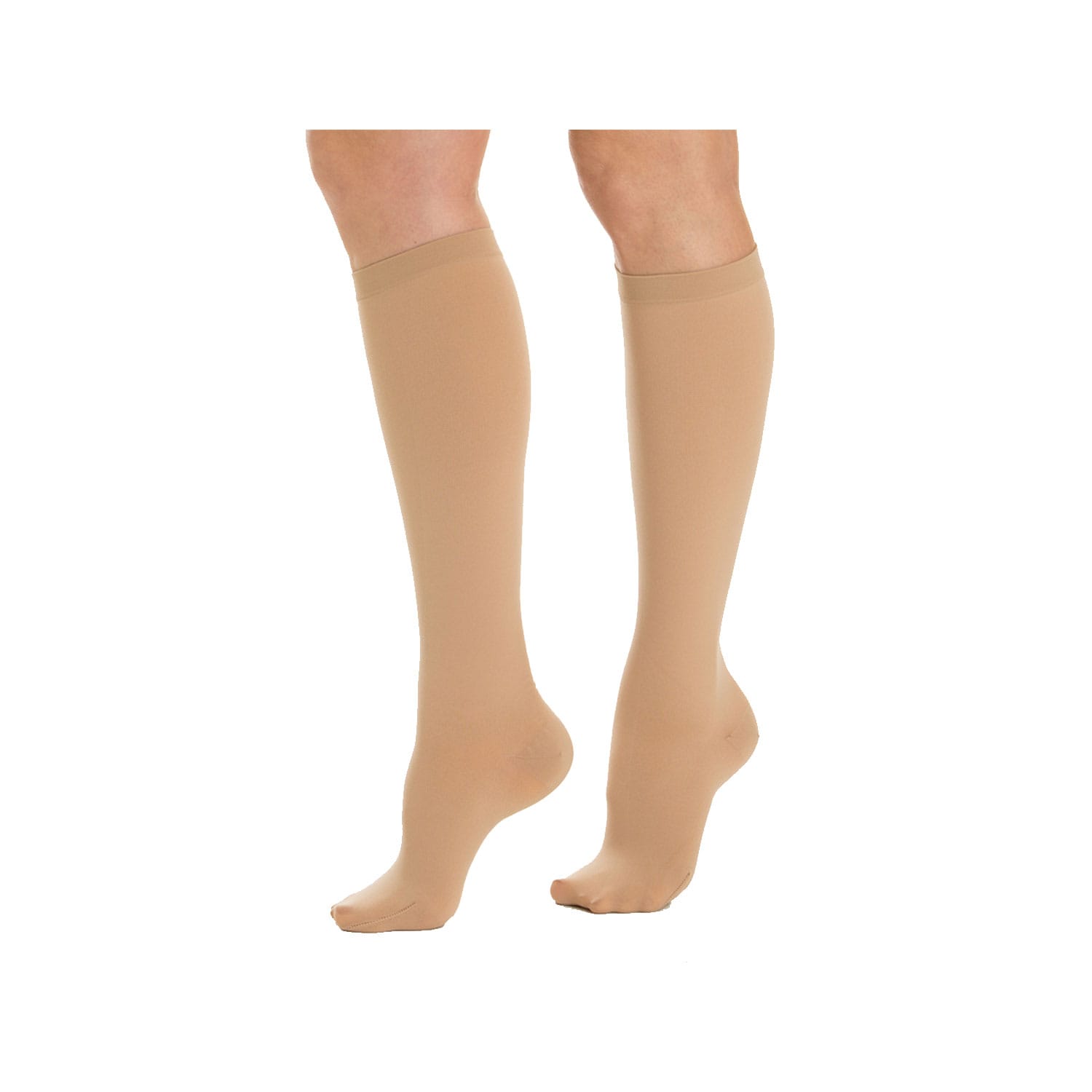
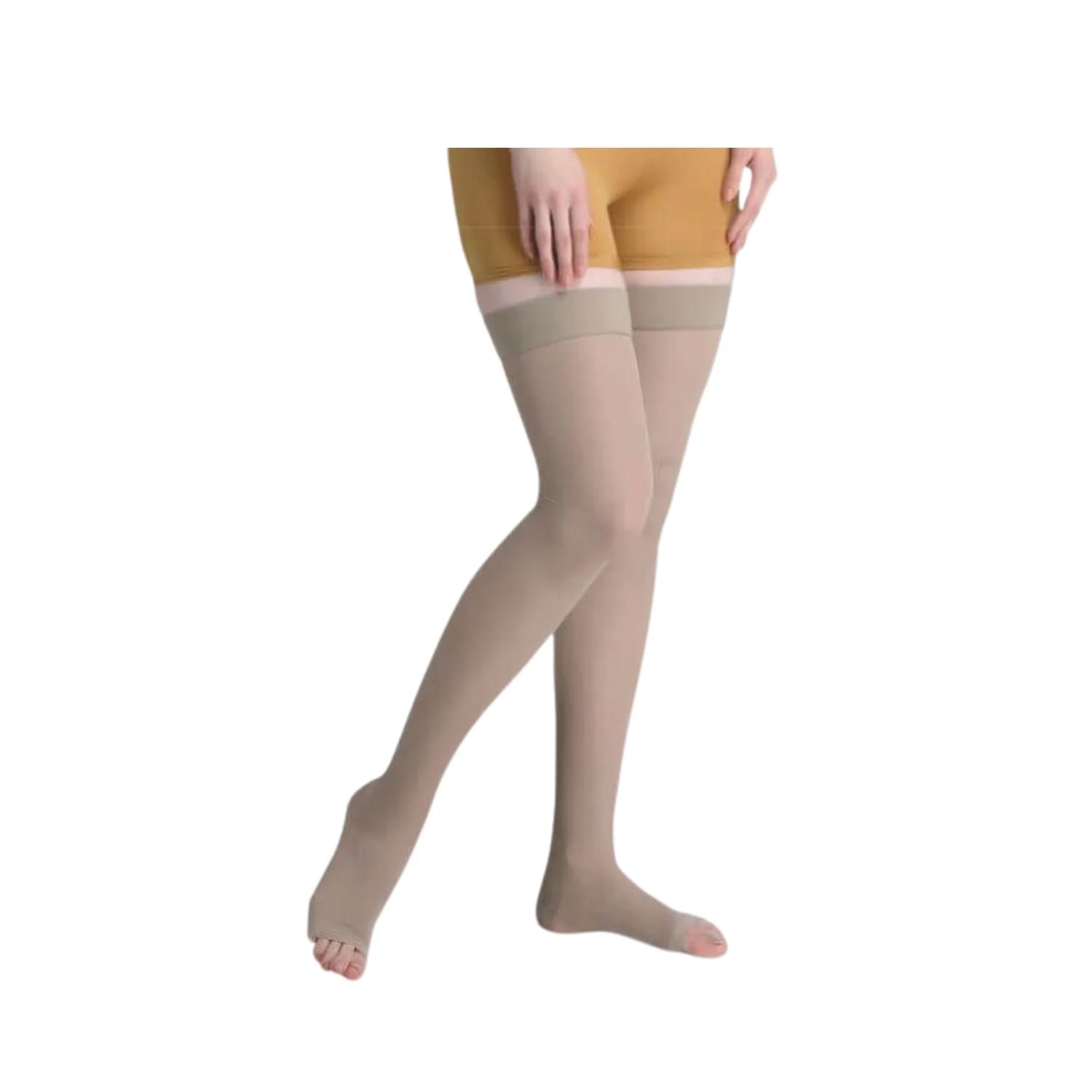
* Compression Stockings: Help reduce swelling and prevent post-thrombotic syndrome.
* Inferior Vena Cava (IVC) Filter: A device placed in a large vein to catch clots if blood thinners can’t be used.
* Lifestyle Adjustments: Weight management, quitting smoking, and staying active.
* Regular Monitoring: Blood tests to adjust and monitor anticoagulant levels.
* Hospitalization: In cases where the risk of pulmonary embolism is high.
Preventing Deep Vein Thrombosis (DVT)
* Stay Active: Walk or stretch frequently, especially during travel or long sitting periods.
* Wear Compression Stockings: Especially after surgery or if at high risk.
* Hydrate Well: Prevents blood thickening, particularly during flights.
* Avoid Smoking: Reduces damage to blood vessels.
* Maintain Healthy Weight: Obesity increases DVT risk.
* Take Medications as Prescribed: Especially if you’ve had surgery or a history of clots.
* Elevate Legs: When resting, to improve circulation.
* Regular Check-Ups: Especially if you have risk factors or a history of clots.
Complications of Deep Vein Thrombosis (DVT)
* Pulmonary Embolism (PE): A life-threatening condition if the clot travels to the lungs.
* Post-Thrombotic Syndrome (PTS): Chronic pain, swelling, and skin discoloration in the affected leg.
* Recurrent DVT: Increased risk of future clots.
* Venous Insufficiency: Impaired blood flow due to damaged valves in the veins.
* Skin Ulcers: In severe, chronic cases.
Specialist to Consult for Deep Vein Thrombosis (DVT)
* General Physician: For initial evaluation and risk assessment.
* Vascular Surgeon: For cases needing invasive procedures or IVC filters.
* Hematologist: For clotting disorders and anticoagulation management.
* Cardiologist: If DVT is associated with cardiovascular issues.
* Pulmonologist: If pulmonary embolism is suspected or diagnosed.
Relaxsan
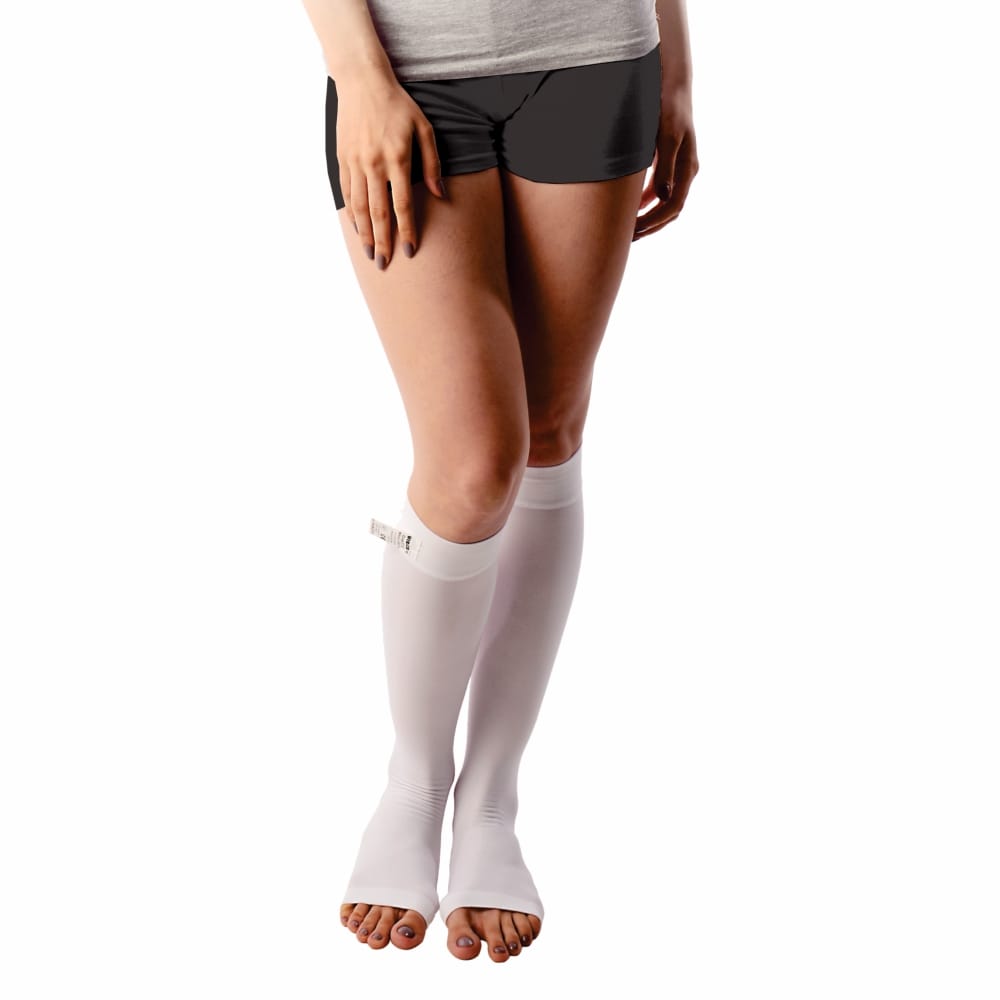
VISSCO
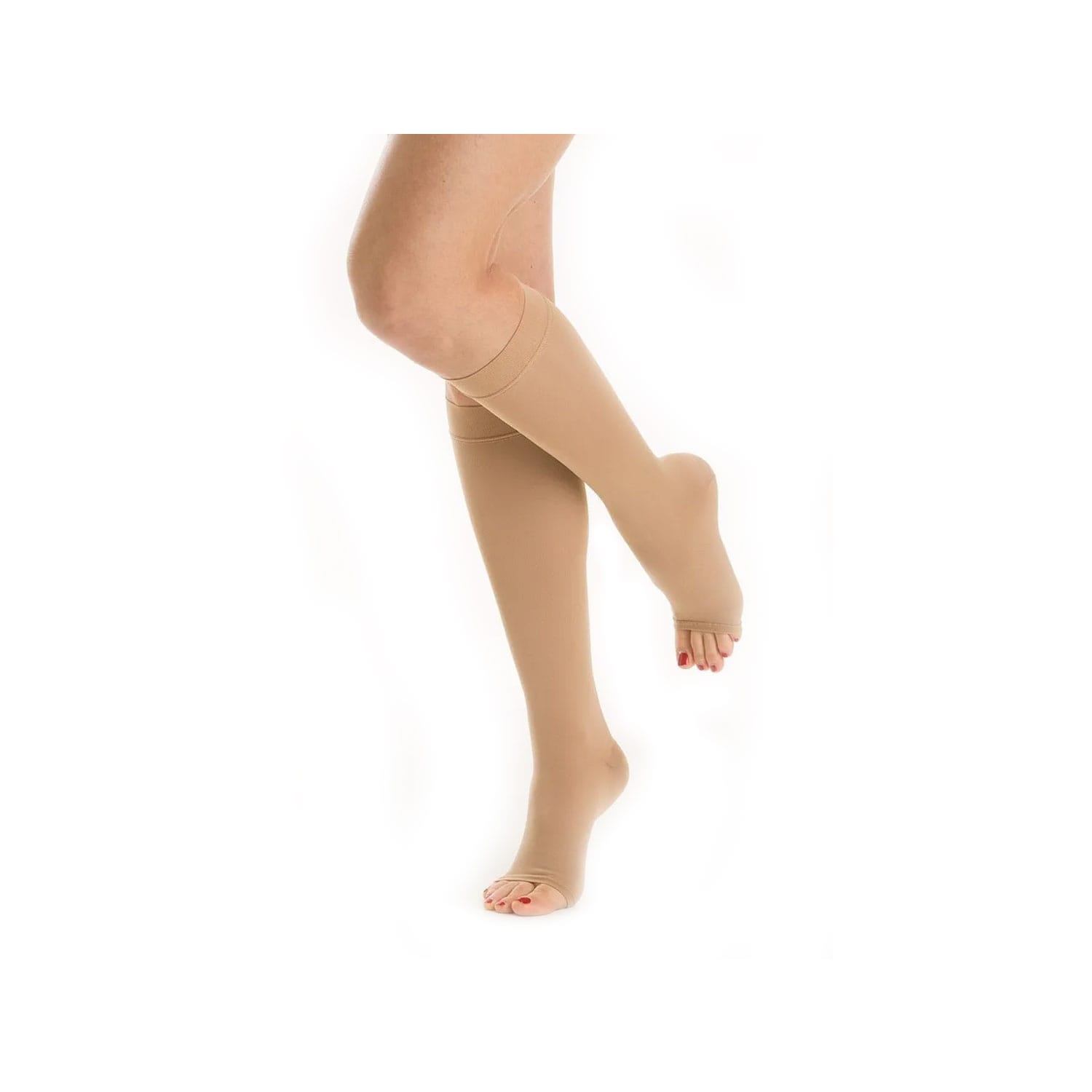
Relaxsan
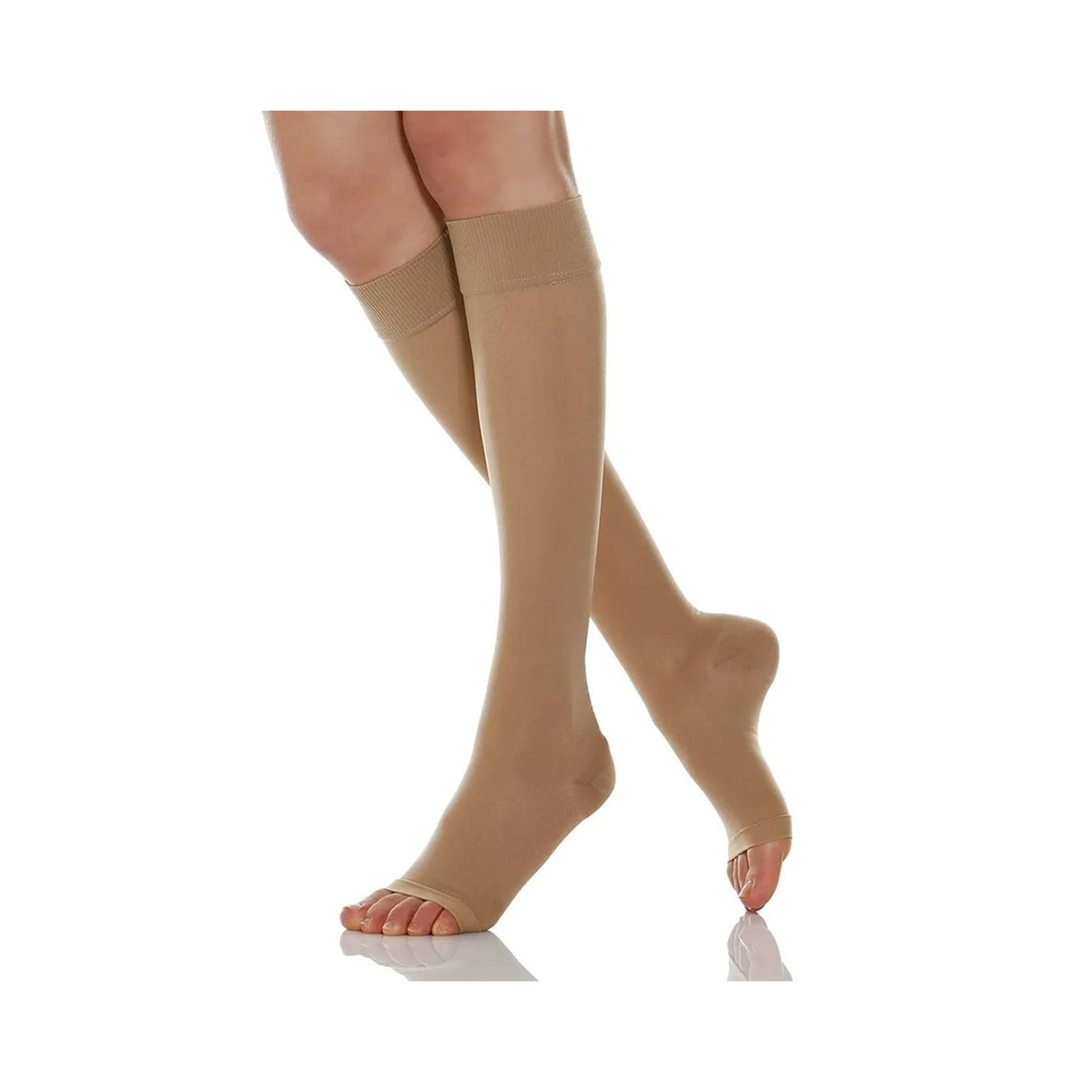
Relaxsan
flamingo
Healthshine
Relaxsan
Relaxsan
VISSCO
Relaxsan
Relaxsan
flamingo