



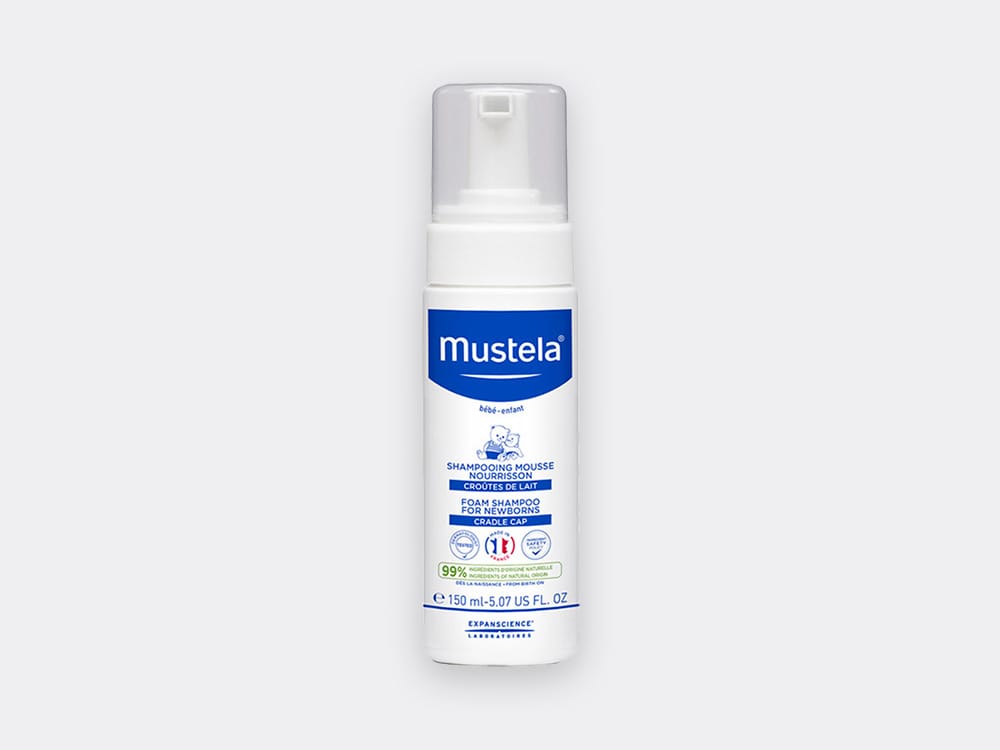
Mustela Foam Shampoo for Newborns 150ml
mustela
0 | 0 reviews
₹1,03510% off₹1,150
Out of Stock
Cradle Cap
Cradle cap, medically known as infantile seborrheic dermatitis, is a common skin condition that appears as greasy, yellowish scales or crusts on a baby’s scalp. It typically occurs in newborns and infants under three months and usually resolves on its own within a few weeks to months. While it may look concerning, cradle cap is generally harmless and not contagious.
Causes of Cradle Cap
• Overactive Sebaceous Glands: Hormones from the mother may cause temporary overproduction of oil in a baby’s skin glands.
• Yeast (Malassezia): A type of fungus that grows in oily areas and contributes to inflammation and scaling.
• Genetic Predisposition: Family history of eczema or other skin conditions.
• Environmental Factors: Dry air or infrequent shampooing can exacerbate buildup on the scalp.
Symptoms of Cradle Cap
• Yellow or White Scales: Oily, crusty patches commonly on the scalp.
• Redness: Mild inflammation around the affected area.
• Flaky Skin: Scales may flake off and resemble dandruff.
• Mild Itching: Usually not bothersome to the baby, but scratching can occur in some cases.
• Spread to Other Areas: May affect ears, eyebrows, eyelids, or diaper area in some infants.
Diagnosis of Cradle Cap
• Physical Examination: Diagnosis is typically clinical based on appearance.
• Medical History: Review of birth and skin care routine to rule out other skin conditions.
• Rule Out Other Conditions: Such as eczema, psoriasis, or a fungal infection if presentation is atypical.
Treatment of Cradle Cap
• Gentle Shampooing: Use a mild baby shampoo daily to soften and remove scales.
• Scalp Massage: Use a soft brush or fingertips to loosen flakes after washing.
• Emollients: Apply natural oils like coconut oil or mineral oil before washing to loosen crusts.
• Medicated Shampoos (under medical supervision): Those with ketoconazole, selenium sulfide, or zinc pyrithione may be used in persistent cases.
• Topical Antifungals or Steroids: Mild creams may be prescribed if inflammation is significant.
• Avoid Scraping: Forcefully removing scales can irritate the scalp or cause infection.
Preventing Cradle Cap
• Regular Scalp Hygiene: Gently wash the baby’s scalp a few times a week.
• Avoid Harsh Products: Use only mild, fragrance-free shampoos and oils.
• Moisturize: If the scalp appears dry, apply a light baby-safe moisturizer.
• Do Not Overheat: Excessive heat and sweating can worsen oil production.
Complications of Cradle Cap
• Secondary Infections: Due to scratching or improper removal of scales.
• Extended Duration: In rare cases, cradle cap can persist into toddlerhood.
• Spread to Other Areas: Can resemble seborrheic dermatitis in older children.
Specialist to Consult for Cradle Cap
• Pediatrician: For routine diagnosis and treatment advice.
• Dermatologist: If the condition is persistent, severe, or spreading.
Cradle Cap
Cradle cap, medically known as infantile seborrheic dermatitis, is a common skin condition that appears as greasy, yellowish scales or crusts on a baby’s scalp. It typically occurs in newborns and infants under three months and usually resolves on its own within a few weeks to months. While it may look concerning, cradle cap is generally harmless and not contagious.
Causes of Cradle Cap
• Overactive Sebaceous Glands: Hormones from the mother may cause temporary overproduction of oil in a baby’s skin glands.
• Yeast (Malassezia): A type of fungus that grows in oily areas and contributes to inflammation and scaling.
• Genetic Predisposition: Family history of eczema or other skin conditions.
• Environmental Factors: Dry air or infrequent shampooing can exacerbate buildup on the scalp.
Symptoms of Cradle Cap
• Yellow or White Scales: Oily, crusty patches commonly on the scalp.
• Redness: Mild inflammation around the affected area.
• Flaky Skin: Scales may flake off and resemble dandruff.
• Mild Itching: Usually not bothersome to the baby, but scratching can occur in some cases.
• Spread to Other Areas: May affect ears, eyebrows, eyelids, or diaper area in some infants.
Diagnosis of Cradle Cap
• Physical Examination: Diagnosis is typically clinical based on appearance.
• Medical History: Review of birth and skin care routine to rule out other skin conditions.
• Rule Out Other Conditions: Such as eczema, psoriasis, or a fungal infection if presentation is atypical.
Treatment of Cradle Cap
• Gentle Shampooing: Use a mild baby shampoo daily to soften and remove scales.
• Scalp Massage: Use a soft brush or fingertips to loosen flakes after washing.
• Emollients: Apply natural oils like coconut oil or mineral oil before washing to loosen crusts.
• Medicated Shampoos (under medical supervision): Those with ketoconazole, selenium sulfide, or zinc pyrithione may be used in persistent cases.
• Topical Antifungals or Steroids: Mild creams may be prescribed if inflammation is significant.
• Avoid Scraping: Forcefully removing scales can irritate the scalp or cause infection.
Preventing Cradle Cap
• Regular Scalp Hygiene: Gently wash the baby’s scalp a few times a week.
• Avoid Harsh Products: Use only mild, fragrance-free shampoos and oils.
• Moisturize: If the scalp appears dry, apply a light baby-safe moisturizer.
• Do Not Overheat: Excessive heat and sweating can worsen oil production.
Complications of Cradle Cap
• Secondary Infections: Due to scratching or improper removal of scales.
• Extended Duration: In rare cases, cradle cap can persist into toddlerhood.
• Spread to Other Areas: Can resemble seborrheic dermatitis in older children.
Specialist to Consult for Cradle Cap
• Pediatrician: For routine diagnosis and treatment advice.
• Dermatologist: If the condition is persistent, severe, or spreading.