

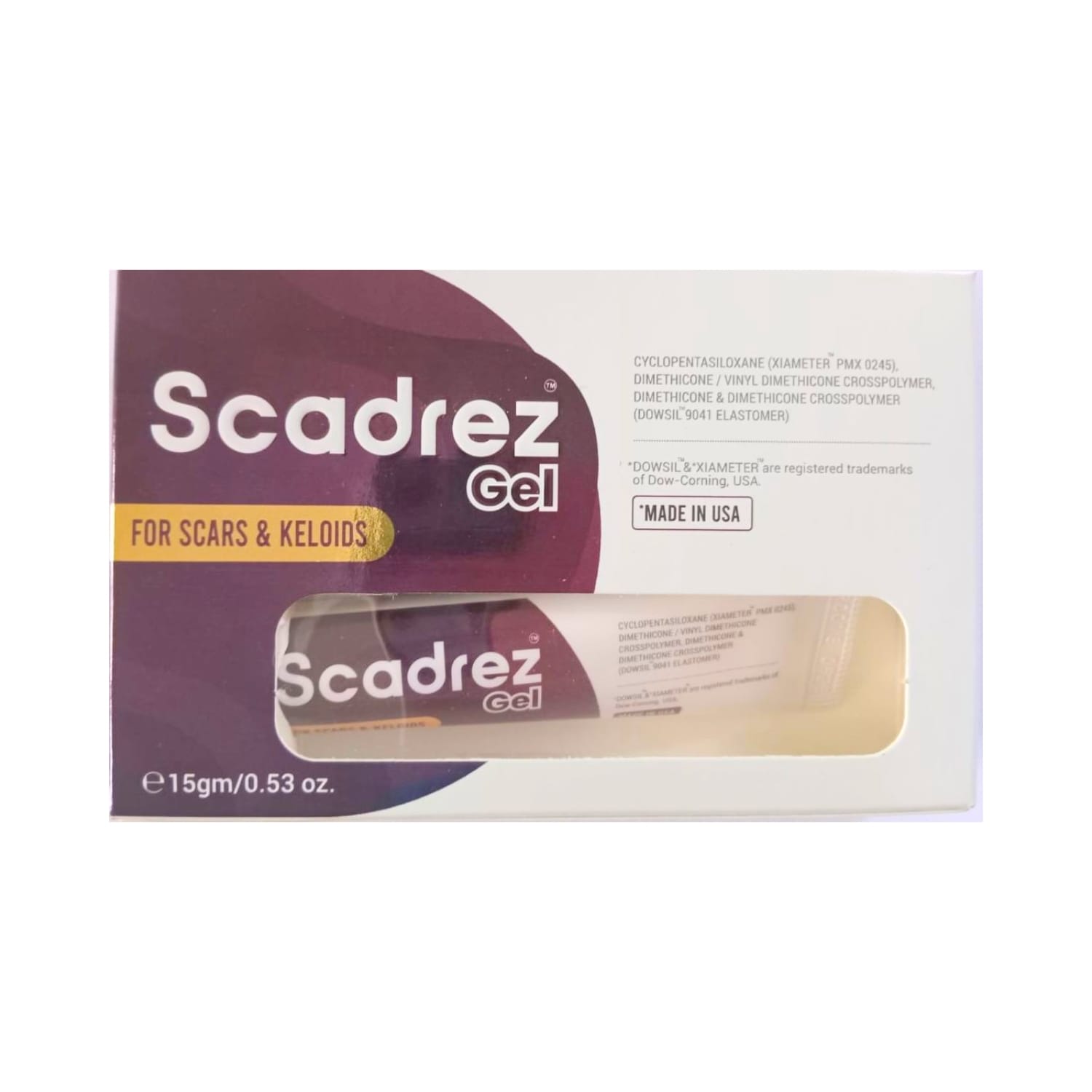
Scadrez Gel for Scars and Keloids (15 gm)
La Vincita
₹790₹790
Burns
Burns are injuries to the skin or other tissues caused by heat, chemicals, electricity, radiation, or friction. They can range from minor injuries to severe, life-threatening conditions, depending on the depth and extent of the damage.
Types of Burns
First-Degree Burns: Affect only the outer layer of skin (epidermis), causing redness, mild swelling, and pain. They usually heal within a few days without scarring.
Second-Degree Burns: Involve the epidermis and the second layer of skin (dermis), resulting in redness, swelling, blisters, and significant pain. Healing can take several weeks, and there may be some scarring.
Third-Degree Burns: Extend through the dermis and affect deeper tissues, leading to a white, charred, or leathery appearance. These burns can be painless due to nerve damage and often require medical intervention and skin grafting for proper healing.
Fourth-Degree Burns: Affect all layers of the skin and underlying tissues, including muscle and bone. They are the most severe type of burn, often resulting in permanent damage and requiring extensive medical treatment.
Causes of Burns
Heat: Contact with flames, hot liquids (scalding), steam, or hot objects can cause thermal burns.
Chemicals: Exposure to corrosive substances like acids or alkalis can lead to chemical burns.
Electricity: Electrical burns occur when current passes through the body, damaging tissues along the path.
Radiation: Sunburns or burns from radiation therapy can damage the skin.
Friction: Rubbing or scraping against a surface can cause friction burns.
Symptoms of Burns
Pain: Varies based on burn severity, with first-degree burns causing mild pain and third-degree burns sometimes resulting in no pain due to nerve damage.
Redness and Swelling: Common in first- and second-degree burns.
Blisters: May develop in second-degree burns, often filled with clear fluid.
Peeling Skin: Occurs as burns heal, especially in first- and second-degree cases.
Charred Skin: Present in third- and fourth-degree burns, indicating severe damage.
Diagnosis of Burns
Diagnosis is usually made through:
Physical Examination: A healthcare provider will assess the burn's severity, depth, and extent of damage.
Medical History: Gathering information about how the burn occurred and any underlying health conditions.
Imaging Tests: In severe cases, X-rays or other imaging may be needed to evaluate damage to underlying tissues or bones.
Treatment of Burns
First-Degree Burns:
* Cool the burn under running water for 10-20 minutes.
* Apply soothing ointments or aloe vera.
* Over-the-counter pain relievers can help manage pain.
Second-Degree Burns:
* Cool the area as with first-degree burns.
* Cover with a non-stick, sterile dressing.
* Avoid breaking blisters, as they protect against infection.
* Seek medical attention if the burn is extensive or shows signs of infection.
Third-Degree Burns:
* Seek immediate medical attention.
* Do not immerse in water, as this can lead to shock.
* Cover the burn with a clean, dry cloth or dressing.
* Treatment may involve intravenous fluids, pain management, and possibly skin grafting.
Fourth-Degree Burns:
* Require emergency medical care.
* Often involve surgery and long-term rehabilitation for recovery.
Preventing Burns
Home Safety: Install smoke detectors, keep flammable materials away from heat sources, and use stove guards to protect children.
Proper Storage: Store chemicals and hazardous substances safely, out of reach of children.
Sun Protection: Use sunscreen, wear protective clothing, and seek shade to prevent sunburn.
Electrical Safety: Avoid using damaged cords and ensure electrical appliances are safe and used correctly.
Cooking Safety: Use pot holders, keep hot liquids out of reach, and supervise children in the kitchen.
Complications of Burns
While burns can often be managed effectively, complications can arise:
Infection: Open wounds can become infected, leading to serious complications.
Scarring and Contractures: Scarring can restrict movement if burns affect joints.
Emotional Impact: Severe burns can lead to psychological effects, including anxiety and post-traumatic stress disorder (PTSD).
Specialist to Consult for Burns
Plastic Surgeons: For reconstructive surgery and treatment of severe burns and resulting scars.
Cosmetic Dermatologists: For skin treatments and cosmetic procedures to improve the appearance of burn scars.